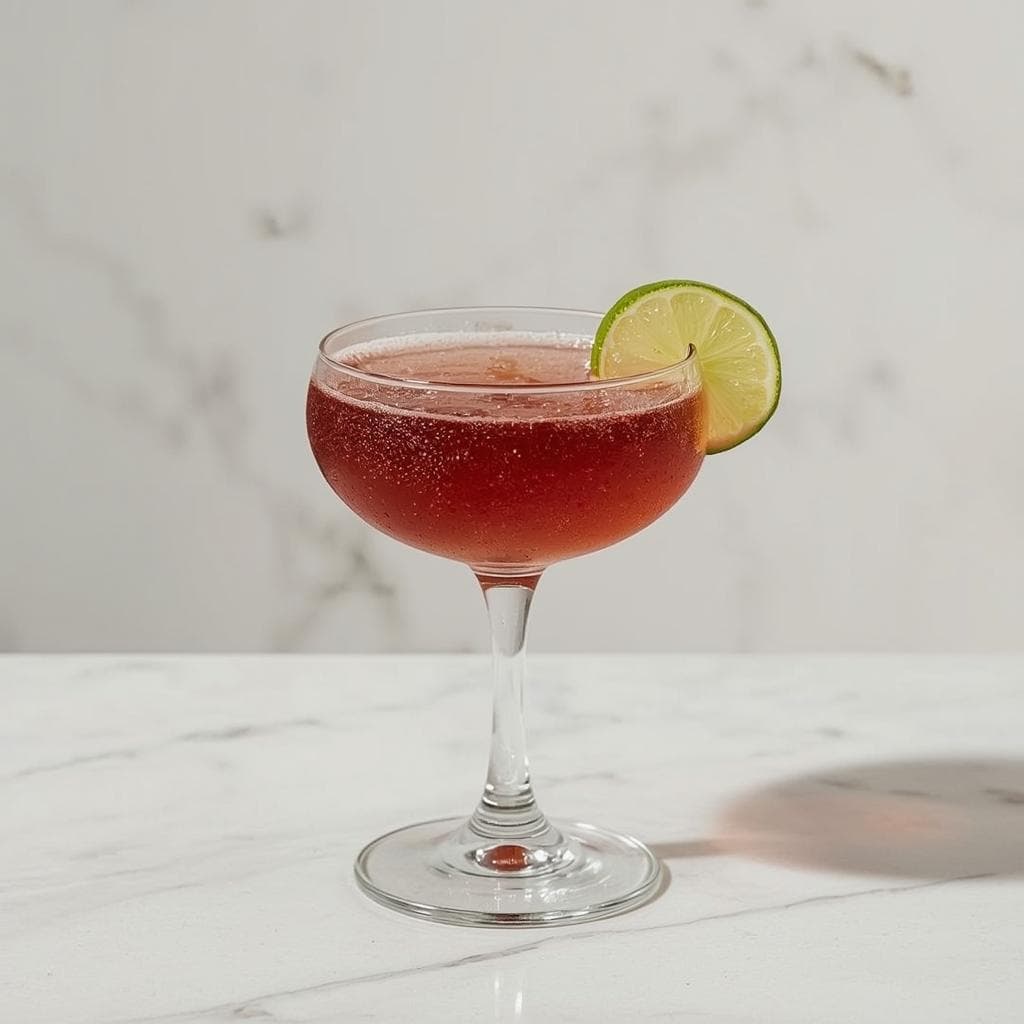
Commodore No. 5
A vintage-feeling bourbon sour accented with dark crème de cacao, lime, grenadine, and a lick of orange bitters. Bright yet plush, it marries citrus snap with delicate cocoa for a poised, after-supper sipper.
History of Commodore No. 5
The Commodore family appears in early- to mid-20th-century bar manuals, though numbering and exact recipes vary by source. Some versions lean lemon and grenadine, others bring in lime and cacao to emphasise a darker chocolate tone. The No. 5 sits comfortably among these variations, a refined whiskey sour that nods to dessert without becoming one. Like many classics, firm attribution is elusive. Bartenders of the era often tweaked ratios and swapped liqueurs to please regulars and house styles, then published their preferred take. Over time, the family name endured while the details shifted slightly from bar to bar. Today, the Commodore No. 5 reads as a bridge between a Bourbon Alexander and a chocolate-kissed sour. It pairs familiar American whiskey warmth with gentle cocoa and pomegranate brightness. The result is both nostalgic and modern, a cocktail that rewards exact technique and cold, dense ice.
Why the Commodore No. 5 Works
Bourbon brings vanillin, oak spice, and a sweet grain core that welcomes cocoa’s subtle bitterness. Lime focuses the mid-palate, tightening the drink so the liqueur reads as flavour, not sugar. A restrained measure of grenadine fills the gap between spirit and citrus, while orange bitters provide aroma and a dry, tidy finish. Shaking with plenty of hard, fresh ice gives brisk dilution that polishes edges without washing out the whiskey. Double straining removes shards and aerates the texture for a satin finish. Served up in a chilled coupe, the drink stays cold long enough to savour its evolving aroma. The garnish is functional: a twist of lime expresses bright oils that lift the chocolate and oak notes. Because the sweetness is held in check, the final sip remains balanced rather than cloying. It’s an elegant way to showcase depth without heaviness.
Should You Mix Ahead?
This is best made to order because lime juice and dilution define the texture. If you must pre-batch, combine bourbon, crème de cacao, grenadine, and bitters in a bottle and chill thoroughly; add fresh lime and shake just before serving. Pre-chilling the spirits and glass helps maintain a tight temperature window. Cold ingredients reduce shake time and prevent over-dilution, which keeps the citrus and cocoa distinct rather than muddy. For small gatherings, you can pre-batch a bottle to yield four serves. Measure 8 oz bourbon, 2 oz crème de cacao, 1 oz grenadine, and 8 dashes bitters; refrigerate. Shake 2.5 oz of the mix with 0.5 oz fresh lime and ice per serve, then double strain.
Food & Snack Pairings
Salt-forward snacks flatter the drink’s chocolate and citrus interplay. Think roasted nuts, green olives, or a hard, nutty cheese that won’t overshadow the whiskey. The saline edge makes the cocoa feel drier and more aromatic. For something heartier, grilled chicken skewers or charred aubergine with tahini pair well with the lime’s lift. The cocktail’s acidity cuts through richness, while the cocoa lingers pleasantly on the finish. Dessert pairings should be restrained in sweetness. A square of dark chocolate or a citrus tart with minimal sugar will emphasise the drink’s balance. Avoid heavy cream-based desserts that can dull the lime and make the drink taste flabby.
How to Make Commodore No. 5
Chill a coupe. Add bourbon, dark crème de cacao, fresh lime juice, grenadine, and orange bitters to a shaker. Fill with cold, dense ice and shake hard for 10 to 12 seconds until the tin is frosty. This integrates the citrus and liqueur while achieving clean dilution. Double strain into the chilled coupe to remove ice shards. Express a lime twist over the surface, wipe the rim, and drop or discard.
When to Serve
Serve after dinner when you want depth without heaviness. The chocolate note reads as a nod to dessert while the lime keeps it lively. It suits autumn evenings and cool spring nights, when oak spice and citrus feel equally welcome. Dim light and a good playlist make it shine. Offer it at small gatherings or date nights where conversation matters. It’s a sip-and-savour drink rather than a crowd chugger.
Common Mistakes
Overpouring crème de cacao makes the drink cloying. Keep it to a tight half ounce and rely on bitters for aroma and structure.
Using tired lime juice or melting ice flattens the profile. Juice fresh and use large, solid cubes so you control dilution during a short, vigorous shake.
Skipping the double strain leaves shards that thin the texture as they melt. Strain through a Hawthorne and fine mesh to maintain a satin finish.
Recommended
Best bourbon for Commodore No. 5
Choose a mid-proof bourbon with clear vanilla and oak notes; avoid anything too high proof that will swamp the cacao. A gentle sweetness helps the cocoa read as aroma rather than sugar. Overly dry or very spicy styles can make the lime feel harsh.
Best liqueur for Commodore No. 5
Use a dark crème de cacao for deeper cocoa notes and colour. The ideal bottling is moderately sweet with a clean cocoa finish and minimal vanilla candy character. Too pale or overly sweet versions can push the drink out of balance.
Taste Profile
Ingredients
Instructions
Chill the glass
Place a coupe in the freezer or pack it with ice water to chill thoroughly.
Build in the shaker
Add bourbon, dark crème de cacao, fresh lime juice, grenadine, and orange bitters to a shaker tin.
Shake hard
Fill the shaker with cold, dense ice and shake vigorously until the tin frosts, about 10–12 seconds.
Double strain
Discard ice from the glass. Fine strain the cocktail into the chilled coupe to remove shards and achieve a satin texture.
Garnish
Express a lime twist over the surface to release oils, wipe the rim, and drop in or discard.
Bartender Tips
Keep sweetness in check
Measure the crème de cacao and grenadine precisely; even a small overpour will tip the drink into syrupy territory.
Use fresh lime and cold ice
Fresh juice and dense cubes give bright flavour and controlled dilution, preserving definition between cocoa and citrus.
Balance to taste
If the finish feels sweet, add a tiny squeeze of lime and shake briefly; if it feels sharp, add a barspoon of grenadine and re-shake.
Build a no-alcohol version by swapping in a zero-proof bourbon alternative, a non-alcoholic cacao syrup, fresh lime, and pomegranate syrup. Keep sweetness restrained so the cocoa reads as flavour, not weight. Shake hard with ice and strain into a chilled coupe for the same satin finish. If you lack a dedicated cacao syrup, a small portion of unsweetened cocoa combined with simple syrup works in a pinch. Bloom the cocoa with hot water before mixing to avoid chalky texture. A touch of orange blossom water can stand in for bitters’ top notes. Serve it as you would the original: cold, up, with a lime twist expressed over the surface. The balance should remain taut, with citrus leading and chocolate humming underneath. Expect a lighter body but similar aroma and structure.
Similar Drinks
Frequently Asked Questions
Which ingredients matter most for balance in a Commodore No. 5?
The ratio of bourbon to dark crème de cacao is the backbone, with lime setting the frame. Keep the liqueur modest so chocolate is aromatic rather than sugary, and use fresh lime for snap. A restrained dash of grenadine bridges spirit and citrus without crowding the glass.
Should I shake or stir, and how long?
Shake hard with plenty of cold, fresh ice for about 10 to 12 seconds. You’re integrating citrus, so stirring will not achieve the same texture or chill. Double strain to keep the finish clean and avoid watery melt.
How strong does it feel and when should I serve it?
It drinks firmly spirit-forward with a bright lift, roughly equivalent to a robust sour. Serve it after dinner or late evening when you want depth without creaminess. The lime keeps it surprisingly nimble for a chocolate-accented cocktail.
Can I batch it or make it ahead for guests?
Yes, pre-mix everything except the lime and keep it very cold. Shake individual portions with fresh juice just before serving to preserve brightness and texture. If a batched mix tastes sweet, add a tiny touch more lime when shaking to restore balance.
Hangover Risk
Risk Level
Hangover risk based on alcohol type, content, and serving size: 3/5. Always drink responsibly.
Recipe Rating
Based on 2 reviews