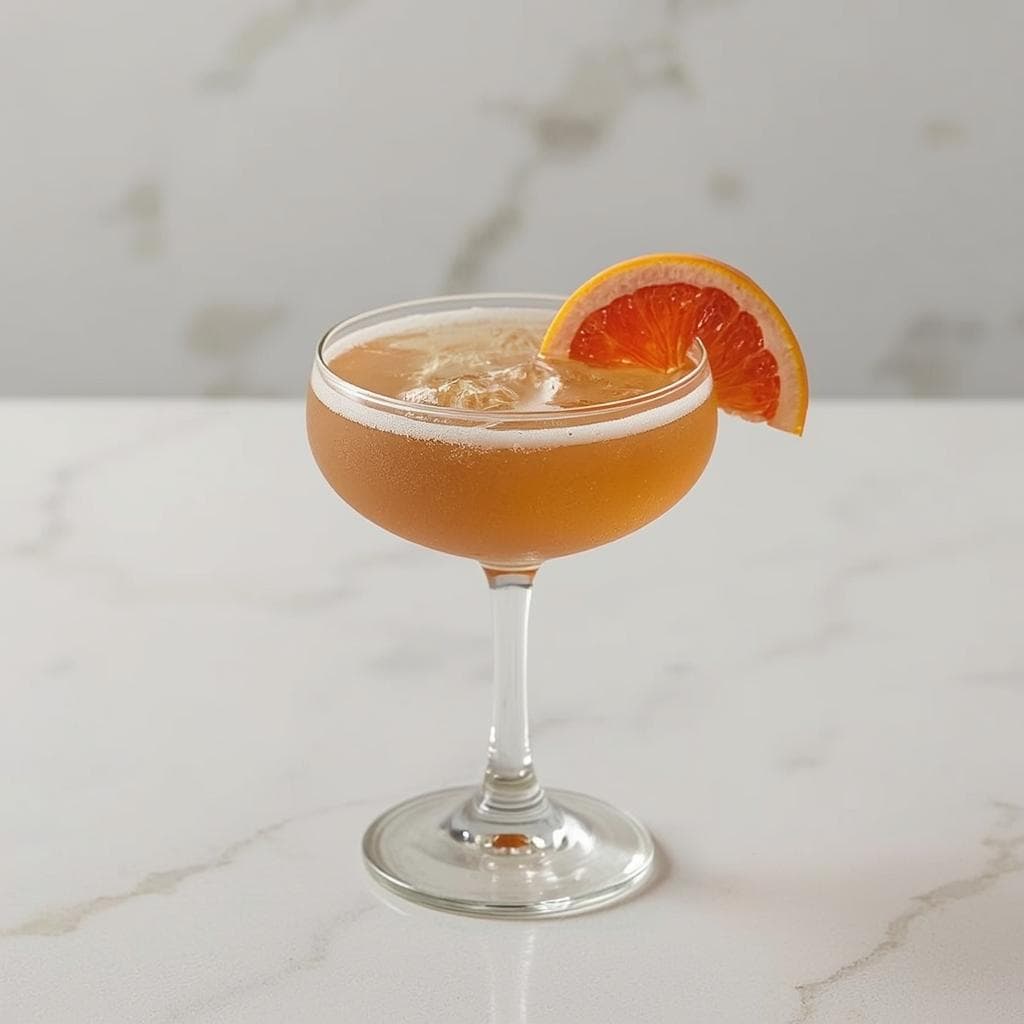
Brown Derby
A bright, honeyed bourbon sour with fresh grapefruit and a silken, citrus-forward finish.
History of Brown Derby
The Brown Derby is widely linked to early 1930s Los Angeles, its name echoing the hat-shaped Brown Derby restaurants. Some accounts place its birth at the Vendôme Club, where light, citrus-led drinks were fashionable. The garnish and structure suggest a bartender aiming for lift and simplicity rather than ornament. Origins are not entirely settled. A near-twin called the De Rigueur appeared in earlier cocktail literature using Scotch rather than bourbon. That overlap implies bartenders were iterating on a grapefruit and honey template rather than inventing from scratch. However you track it, the Brown Derby stuck because it tastes modern: three ingredients, clean lines, and a friendly proof. It reads like a cousin to the Gold Rush, but grapefruit’s pithy snap pushes it in a sunnier direction. That ease and brightness explain its long shelf life on menus.
Why the Brown Derby Works
Bourbon brings vanilla and spice, honey syrup rounds the edges, and grapefruit adds crisp bitterness and high-toned acidity. The trio is complementary, with honey bridging the gap between oak and citrus. The structure is essentially a sour, trimmed to its essentials. Shaking hard with cold ice integrates honey’s viscosity while adding controlled dilution. This thins the syrup just enough to let citrus and grain show clearly. The result is a lighter, glossier palate without losing body. A fine strain removes ice shards and pulp for a sleeker texture. The grapefruit twist resets the nose with fresh oils, boosting perceived brightness. That final aromatic lift keeps the finish clean and appetite-whetting.
Should You Mix Ahead?
For a party, pre-batch bourbon and honey syrup in a bottle and chill thoroughly. Add fresh grapefruit juice no more than a few hours before service to preserve brightness. Always shake portions with ice to achieve proper dilution and texture. If holding longer, keep the juice separate and recombine just before shaking. Citrus oxidises and dulls, so cold storage and minimal headspace help. Label your bottle with ratios to make service quick and consistent. Do not pre-dilute unless you are serving from a chilled dispenser. When pre-diluting, test a small batch to hit the same chill and mouthfeel as a shaken serve. Strain to remove any pulp that might clog pourers.
Food & Snack Pairings
Salted nuts, olives, or crisps echo the drink’s aperitif role and make the grapefruit pop. The honeyed finish welcomes mild, creamy cheeses which soften the citrus edge. Avoid overly sweet snacks that would mute the drink’s snap. Citrus-friendly seafood like shrimp cocktail, crab, or grilled prawns plays beautifully with the grapefruit oils. The bourbon’s vanilla and spice also flatter lightly smoked fish. Keep seasoning bright with lemon, herbs, and a touch of chilli. For heartier options, try roast chicken with herb butter or a citrus-dressed grain salad. The cocktail’s acidity cuts richness while honey keeps things friendly. Finish with a small square of dark chocolate if you want a contrasting bitter note.
How to Make Brown Derby
Chill a coupe and prepare honey syrup if needed by combining equal parts honey and hot water, stirring until clear, then cooling. Freshly squeeze grapefruit juice and fine strain to remove excess pulp. Measure accurately to protect balance. Add bourbon, grapefruit juice, and honey syrup to a shaker with plenty of solid ice. Shake hard for 10–12 seconds to chill, dilute, and aerate, which lifts the honey’s texture. The tin should frost on the outside. Fine strain into the chilled coupe to remove ice chips and pulp. Express a grapefruit twist over the surface, wipe the rim, and drop or discard. Serve immediately while ice-cold and fragrant.
When to Serve
Serve as an aperitif before dinner when you want appetite-whetting brightness. It suits spring and early summer, especially when grapefruit is lively. The moderate strength keeps conversation light. At brunch, it offers a grown-up alternative to sparkling cocktails without heaviness. The honeyed finish plays well with savoury dishes. Keep portions tight for daytime pacing. For cocktail hours, it slots into citrus-led line-ups and balances spirit-forward neighbours. Its colour and garnish bring easy visual charm. Batch the base to streamline a gathering.
Common Mistakes
Using raw honey instead of syrup leads to clumping and uneven sweetness. Always make a 1:1 honey syrup so it integrates under shake. Cool it fully to avoid melting the ice prematurely.
Under-shaking leaves the drink warm and thick. Shake firmly with plenty of fresh ice until the tin frosts and the sound softens. Fine strain to avoid watery ice chips in the glass.
Old or bottled grapefruit juice flattens the drink. Use fresh juice and taste for bitterness, adjusting honey by a barspoon if needed. A proper grapefruit twist is not optional; it completes the aroma.
Recommended
Best whiskey for Brown Derby
A mid-proof bourbon around the middle of the range keeps the drink friendly while offering vanilla and gentle spice. Too high proof can overpower grapefruit and make the honey feel thin. Aim for a balanced profile rather than a bold oak bomb.
Taste Profile
Ingredients
Instructions
Chill and prep
Chill a coupe. Prepare fresh grapefruit juice and honey syrup if needed, then cool the syrup fully.
Build in shaker
Add bourbon, fresh grapefruit juice, and honey syrup to a shaker. Fill with plenty of fresh ice.
Shake hard
Shake vigorously until the tin frosts and the sound softens, about 10–12 seconds, to chill and dilute properly.
Strain and garnish
Fine strain into the chilled coupe. Express a grapefruit twist over the surface, wipe the rim, and drop or discard.
Bartender Tips
Balance the honey
If your grapefruit is very tart, add a barspoon more honey syrup; if it’s sweet, reduce the syrup slightly to keep the drink crisp.
Use a mild honey
Choose a light, mild honey so the spirit shines; darker honeys can dominate and muddy the finish.
Shake like you mean it
Honey needs vigorous shaking to integrate. Hard shaking also builds a satiny texture and tight foam collar.
Build a no-alcohol Brown Derby by swapping bourbon for a quality alcohol-free bourbon-style spirit. Keep the honey syrup and fresh grapefruit, as they carry the drink’s flavour and texture. Shake hard to achieve proper dilution and aeration. If you prefer to avoid honey, use a 1:1 agave or cane syrup and adjust to taste. A tiny pinch of salt enhances perceived sweetness and rounds bitterness from grapefruit. Fine strain to keep the finish clean and poised. Serve in a chilled coupe with a grapefruit twist. The aromatic oils do a lot of work in the absence of ethanol. Expect a bright, gently bitter refresher that still feels grown-up.
Similar Drinks
Frequently Asked Questions
What bourbon and honey should I use for a balanced Brown Derby?
Choose a mid-proof bourbon with clear vanilla and spice so the oak supports rather than overwhelms the citrus. Use a mild, light-coloured honey to keep floral sweetness without turning resinous. Make a 1:1 honey syrup for smooth integration and consistent sweetness.
Should I shake or stir a Brown Derby, and how long?
Shake hard with plenty of fresh ice for about 10–12 seconds. The goal is to chill fully, introduce fine aeration, and thin the honey syrup for a silky mouthfeel. Fine strain to remove ice shards and pulp for a cleaner finish.
How strong does it taste and when is it best served?
It drinks medium-light, with a bright citrus snap and a gentle honey cushion rather than heat. Serve as an aperitif, at brunch, or during a spring cocktail hour when you want lift and freshness. The grapefruit twist adds an aromatic pop that feels celebratory without being heavy.
Can I batch it ahead and what are common fixes if it tastes off?
Pre-batch bourbon and honey syrup and keep very cold, then add fresh grapefruit close to service and shake portions to order. If it tastes too tart, add a barspoon of honey syrup; if too sweet, increase grapefruit slightly or shake longer for more dilution. A tiny pinch of salt can round bitterness without adding sugar.
Hangover Risk
Risk Level
Hangover risk based on alcohol type, content, and serving size: 3/5. Always drink responsibly.
Recipe Rating
Based on 2 reviews