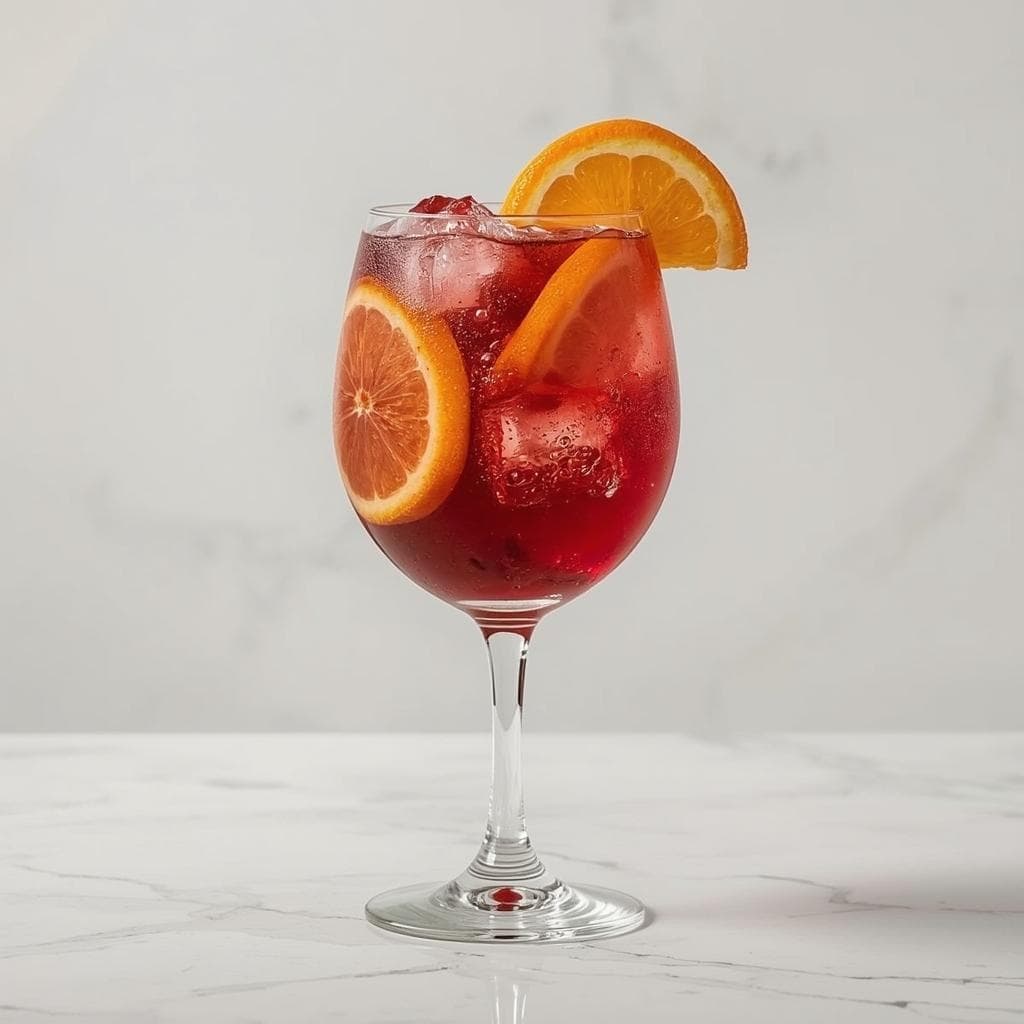
Red Sangria
A sun-ready Spanish classic: dry red wine fortified with brandy, brightened with citrus and apple, lightly sweetened, and finished with a spritz of soda. Juicy, refreshing, and perfect for a crowd.
History of Red Sangria
Sangria has roots in Iberia, where wine was often mixed with water and aromatics for refreshment and safety. The modern red sangria likely coalesced in the 19th and early 20th centuries as citrus, ice, and fortified spirits became more accessible. Its exact origin is hazy, but the drink embodies Spain’s casual, convivial approach to wine. By the mid-20th century, sangria became a staple at fiestas and tourist spots, celebrated for easy mixing and crowd appeal. Recipes travelled, adapting to local fruit and sweetness preferences. What remained constant was the balance of wine’s structure with fresh fruit and gentle fortification. Today, red sangria is a global summer icon, served at barbecues, picnics, and tapas bars. Styles range from lean and dry to sweet and sparkling. The best versions keep the wine front and centre, using fruit as a garnish and seasoning, not a disguise.
Why the Red Sangria Works
Dry red wine provides structure and tannin, which keep the drink from tasting syrupy once fruit and syrup are added. A modest pour of brandy lifts aroma and length without overwhelming the base. Fresh citrus and apple add acid and texture, while a late addition of soda water brings lift without washing out flavour. Chilling the batch for a couple of hours lets fruit macerate, melding flavours and rounding tannins. Because sweetness can creep up, starting with less syrup and adjusting is key. Ice in the pitcher just before serving controls dilution in real time. Serving in a wine glass focuses aroma and shows off the colour and fruit. A gentle stir preserves bubbles and keeps fruit evenly distributed. The result is balanced, bright, and endlessly drinkable.
Should You Mix Ahead?
Mix the wine, brandy, citrus, apple, juice, and syrup 2 to 4 hours ahead to let flavours meld. This short maceration softens tannins and perfumes the batch without turning the fruit mushy. Longer than overnight can make peels bitter and textures dull. Hold back the soda water and the bulk of the ice until just before serving. This protects carbonation and prevents over-dilution. Keep the pitcher in the fridge so it is properly cold when topped and poured. If you need to make a large batch, build multiple half-batches so the fruit stays fresh in each. Pre-slice garnish wheels and store them dry in the fridge. Stir gently before each round of service to re-distribute fruit without knocking out bubbles.
Food & Snack Pairings
Salty, savoury snacks are ideal: olives, roasted nuts, and crisps balance the fruit and sweetness. Charcuterie and firm cheeses work well because fat and salt tame tannin. A little heat from chorizo or paprika snacks is excellent with the chilled, juicy profile. From the grill, serve chicken thighs, pork skewers, or prawns with lemon and herbs. The acid and fruit clean the palate between bites. Avoid heavy barbecue sauce that can push the drink too sweet; use citrusy rubs instead. For lighter fare, pair with tomato salads, gazpacho, or tortilla española. Fresh herbs and ripe tomatoes echo the sangria’s brightness. Finish with simple fruit like orange segments or berries rather than sugary desserts.
How to Make Red Sangria
Slice the orange, lemon, and apple thinly so they infuse quickly without hogging space in the glass. Add the fruit to a large chilled pitcher with the cinnamon stick if using. Pour in the red wine and brandy. Add orange juice and simple syrup, then stir briefly to combine. Taste the base; it should be bright and only lightly sweet. Adjust with small additions of syrup or juice until balanced. Refrigerate for 2 hours for flavour to meld. When ready to serve, add plenty of ice to the pitcher and top with soda water. Stir gently to preserve bubbles and pour into wine glasses with a slice of fruit.
When to Serve
Serve on warm afternoons, garden parties, and weekend barbecues when you want something cold and convivial. It is also an excellent welcome drink for casual gatherings. Keep pitchers moving so glasses are always fresh and cold. For daytime occasions like brunch or picnics, lean slightly drier and lighter on the brandy. In the evening, you can nudge sweetness up a touch and use more ice to keep it crisp. It travels well in a cooler if you add soda on arrival. Sangria shines in summer, but works in spring with slightly richer fruit. In cooler months, favour blood orange and skip the soda for a still version. Always serve in wine glasses to elevate the experience.
Common Mistakes
Over-sweetening is the top mistake. Start with less syrup than you think and adjust after chilling, as fruit adds sugar and softens tannins. If it gets too sweet, add a splash of wine and a squeeze of lemon.
Using heavily oaked or very tannic wine can make the drink bitter. Choose a dry, fruity red with moderate tannin. If bitterness creeps in, strain out peels and add a little more juice to rebalance.
Adding soda too early kills fizz and invites dilution. Hold back carbonation and most of the ice until serving time. If the batch becomes flat, serve it still and garnish with fresh citrus to lift aroma.
Recommended
Best wine for Red Sangria
Choose a dry, fruit-forward red with moderate tannin and minimal oak. Heavy oak can taste bitter when chilled and mixed with citrus, while very tannic reds can fight the fruit. Think fresh berry and cherry flavours that will stay lively in the fridge.
Best brandy for Red Sangria
Use a classic grape brandy around 40% ABV to add warmth and a subtle dried-fruit note. You only need a modest measure so it supports, not dominates, the wine and citrus. Avoid heavily flavoured or sweetened styles.
Taste Profile
Ingredients
Instructions
Prep the fruit
Thinly slice the orange and lemon, and core and thinly slice the apple. Keep everything cold.
Build the base
Add the sliced fruit and the cinnamon stick to a large chilled pitcher. Pour in the red wine and brandy.
Season
Add orange juice and simple syrup. Stir and taste; the mix should be bright and only lightly sweet.
Macerate
Refrigerate the pitcher for 2 hours to let flavours meld and tannins soften.
Prepare to serve
Add plenty of fresh ice to the pitcher or directly to glasses.
Finish with bubbles
Top the pitcher with soda water and give a gentle stir to preserve carbonation.
Serve
Pour into wine glasses, making sure each gets some fruit. Garnish with an orange wheel if you like.
Bartender Tips
Choose the right wine
Use a dry, fruity red with moderate tannin and minimal oak so the drink stays bright and not bitter.
Sweeten cautiously
Start with less syrup than you think; fruit adds sugar during chilling. Adjust after tasting the cold mix.
Add bubbles last
Soda water should go in at the end to keep fizz lively and avoid watery flavours.
Serve very cold
Chill the pitcher and fruit ahead, then use plenty of fresh ice so each pour is crisp and refreshing.
To make an alcohol-free red sangria, use a quality dealcoholised red wine or a blend of red grape juice cut with chilled strong black tea for tannin. Skip the brandy and add a splash of pomegranate juice for depth. Keep sweetness restrained and finish with soda water for lift. The method remains the same: slice citrus and apple, mix with the base and a little syrup, then chill for at least an hour. Add ice and soda just before serving to preserve fizz. Taste and adjust the syrup and citrus to keep it bright rather than sticky. Serve in wine glasses with fresh ice and a neat citrus wheel. The result is juicy and refreshing with a similar look and feel, perfect for daytime and inclusive gatherings. Pair with the same tapas-style snacks and light grilled dishes.
Similar Drinks
Frequently Asked Questions
What wine and fruit should I choose for classic Red Sangria?
Pick a dry, fruit-forward red with moderate tannin and minimal oak so it stays bright after chilling. Use fresh orange, lemon, and a crisp apple; berries are optional. The fruit should taste good on its own and be sliced thinly for quick infusion.
How do I get the right balance and texture?
Chill the base for 2 hours so the fruit gently macerates, then add ice and soda just before serving. Start with modest syrup and adjust after tasting; it should be refreshing, not sticky. Stir gently to keep bubbles and fruit evenly distributed.
Can I make Red Sangria ahead or in a big batch for a party?
Yes. Build the wine, brandy, fruit, juice, and syrup a few hours ahead, keep it cold, and hold the soda until the last minute. For large groups, make multiple smaller pitchers so fruit stays fresh and the first glass tastes like the last.
How strong does it taste and what should I serve it with?
Red Sangria tastes medium-light in strength, about like a spritzy glass of wine, with an easy 9% vibe that suits daytime. Pair with salty snacks, tapas, grilled chicken or prawns, and tomato salads. If it reads too strong, add a touch more soda and ice; if too light, skip the soda and serve still.
Hangover Risk
Risk Level
Hangover risk based on alcohol type, content, and serving size: 4/5. Always drink responsibly.
Recipe Rating
Based on 3 reviews