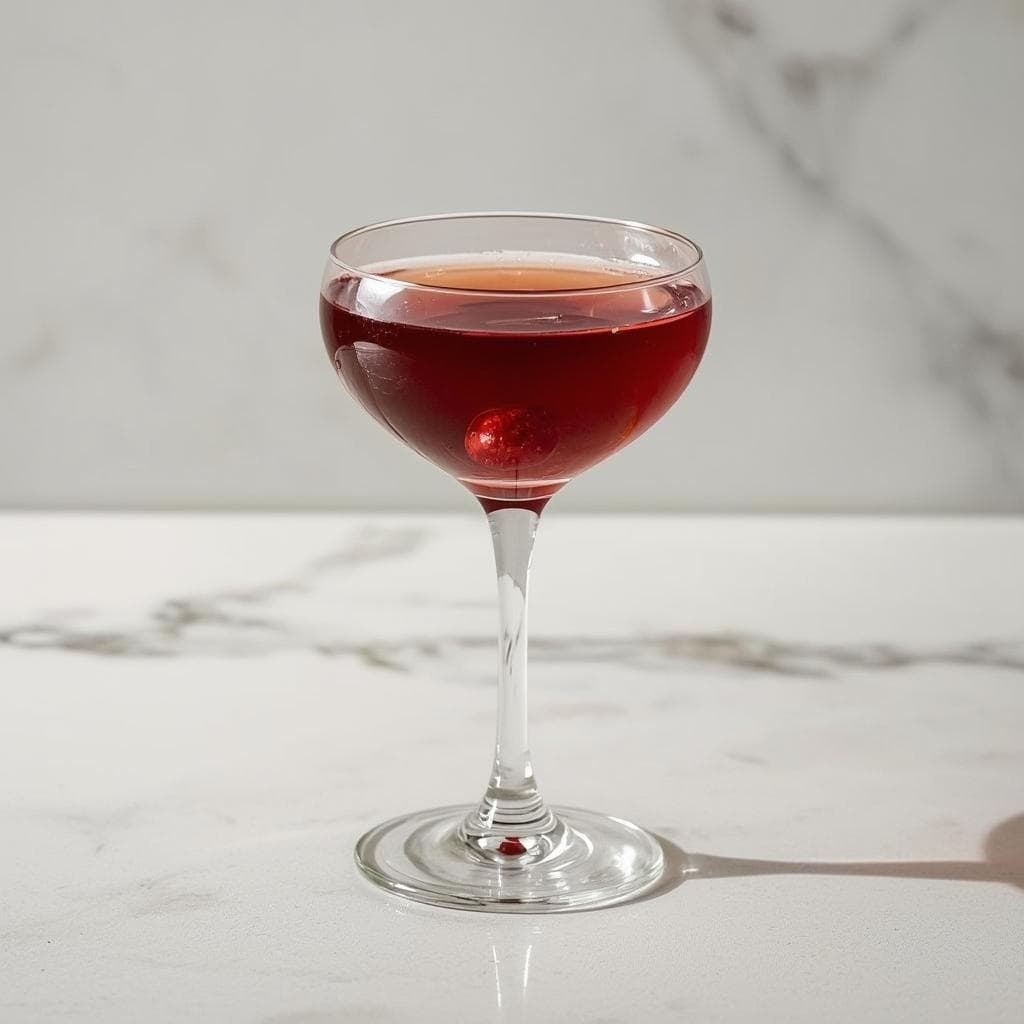
Red Hook
A Manhattan descendant that swaps classic sweetness for a darker cherry-bitter profile. Rye’s spice leads, a robust sweet vermouth tightens the mid-palate, and maraschino liqueur threads a dry cherry note through the finish.
History of Red Hook
The Red Hook emerged from New York’s cocktail revival, widely attributed to Enzo Errico at Milk & Honey in the early 2000s. Exact dating varies by source, but it sits among a set of Brooklyn-named riffs that updated the Manhattan for modern palates. The name nods to the Red Hook neighbourhood, continuing the borough’s naming lineage. Built on rye whiskey with a bitter-leaning sweet vermouth and a thread of maraschino liqueur, it captured the era’s taste for sharper, more aromatic profiles. Bartenders embraced its clarity: three ingredients, a tight ratio, and a clean stirred texture. It was quick to spread because it delivered bar-room gravitas without complexity. Over time, small variations appeared, mostly adjusting the maraschino portion or the vermouth style. The core remained constant: spicy rye, firm herbal sweetness, and cherry-almond perfume. Its persistence on menus marks it as a true modern classic despite the fuzzy origin year.
Why the Red Hook Works
Rye provides structure: spice, dryness, and length. A robust sweet vermouth adds herbal sweetness and a faint bitterness that reins in the rye and frames the maraschino. The maraschino doesn’t sweeten as much as it perfumes, offering cherry, almond, and a subtle saline snap that lifts aroma. The 2:0.5:0.25 ratio balances intensity with restraint. Stirring over solid ice chills the drink while adding about 20–25 percent dilution, softening edges without muting spice. Served up in a small stem, it presents concentrated aroma and a satin texture. Because the drink is only three parts, ingredient choice is amplified. A spicier rye keeps the finish dry; a more bitter-leaning vermouth tightens the mid-palate. Holding the maraschino to a quarter ounce prevents a sugary or medicinal note.
Should You Mix Ahead?
This drink batches beautifully. Combine rye, sweet vermouth, and maraschino in a clean bottle at a 8:2:1 ratio by volume. Store refrigerated and pour 2.75 oz per serving into a mixing glass with ice for service-time chilling and dilution. If you prefer a ready-to-pour bottle, add cold filtered water equal to 20–22 percent of total volume to pre-dilute. Keep the bottle in the freezer and serve straight into a chilled stem. Always taste a small sample to confirm dilution before bottling the full batch. Shelf life is excellent thanks to high spirit content, but vermouth is wine-based and loses aroma. Keep the batch sealed and cold; aim to finish within two weeks for best flavour. Add fresh garnish at service.
Food & Snack Pairings
Salty, fatty snacks flatter the Red Hook’s spice and cherry perfume. Try charcuterie, firm nutty cheeses, and marinated olives. The drink’s dryness resets the palate between bites. Roasted poultry, grilled sausages, or a steak sandwich work well because the rye cuts through richness. Bitter greens with a sharp vinaigrette mirror the drink’s herbal core. Keep sauces savoury rather than sweet. For a small sweet, choose dark chocolate with a high cocoa percentage or cherry-studded biscotti. Avoid heavy desserts that would overshadow the drink’s aromatics. A simple salted almond mix is a reliable side.
How to Make Red Hook
Chill a Nick & Nora glass. Add rye whiskey, sweet vermouth, and maraschino liqueur to a mixing glass. Fill with solid ice and stir until very cold and slightly viscous, about 20–25 seconds. Taste a drop: it should feel silky, not hot. Fine-strain into the chilled glass and garnish with a maraschino cherry. Serve immediately while the surface still shines.
When to Serve
Serve as an early evening sharpener or pre-dinner aperitif when guests want something serious but concise. Its dryness sets up the appetite without coating the palate. It shines in cool weather, especially autumn and winter, when spice and depth feel comforting. In summer, keep everything extra cold and the pour modest. Ideal for small gatherings and date nights where conversation matters. It is also a refined nightcap for those who prefer clarity over sweetness.
Common Mistakes
Over-pouring the maraschino liqueur leads to a cloying, cough-syrup impression. Measure carefully and keep it to a quarter ounce; if sweetness lingers, increase stirring for slightly more dilution.
Using a soft, sweet vermouth without bitterness flattens the mid-palate. Choose a robust, bitter-leaning red vermouth or add a scant barspoon more rye to pull the drink dry.
Under-chilling results in a hot, thin texture. Use cold, dense ice and stir to a faint viscosity; the surface should look glossy and the aroma immediate on the first sip.
Recommended
Best whiskey for Red Hook
Select a rye with clear spice and a dry finish; it is the structural element. Standard bottling strength keeps the drink punchy without tipping hot. Avoid heavily sweet or cask-finished expressions that can blur the dry profile.
Best vermouth for Red Hook
Use a red vermouth with assertive herbal character and a touch of bitterness. This reins in the maraschino and tightens the mid-palate. Lighter, confectionary styles can make the drink feel flabby.
Best liqueur for Red Hook
Maraschino liqueur should be used sparingly; it’s about aroma more than sweetness. A quarter ounce is the sweet spot for cherry-almond perfume without medicinal overtones.
Taste Profile
Ingredients
Instructions
Chill the glass
Place a Nick & Nora glass in the freezer or fill with ice water to chill thoroughly.
Build in mixing glass
Add rye whiskey, sweet vermouth, and maraschino liqueur to a mixing glass.
Stir to chill and dilute
Fill the mixing glass with solid ice and stir briskly until very cold and slightly viscous, about 20–25 seconds.
Strain
Discard the ice from the glass, then fine-strain the cocktail into the chilled Nick & Nora.
Garnish and serve
Drop in a maraschino cherry. Serve immediately.
Bartender Tips
Choose a bitter-leaning vermouth
A robust red vermouth with noticeable bitterness keeps the drink from reading syrupy and balances the maraschino.
Keep the maraschino in check
A quarter ounce is plenty; more can dominate with medicinal cherry. If you overpour, add a splash more rye and stir longer.
Mind your dilution
Stir until the texture turns silky and the aroma blooms. Under-diluted tastes hot; over-diluted tastes flat.
Build a zero-alcohol Red Hook by combining a spicy rye-style non-alcoholic spirit with a bitter-leaning red aperitif and a small measure of cherry-almond syrup. Keep the proportions tight to avoid excess sweetness and lean on chilling to create texture. A short, hard stir with solid ice mimics the silk of the original. For the vermouth note, choose a non-alcoholic red aperitif with herbal depth and a restrained sugar profile. If it is too sweet, cut it with cooled strong black tea to add tannin. A drop of cider vinegar can supply the missing bite. Garnish with a quality cherry and serve in a chilled small stem to concentrate aroma. The drink will not have the same length as the alcoholic version, so keep the maraschino analogue to a whisper. The goal is aroma first, then a clean, dry finish.
Similar Drinks
Frequently Asked Questions
What rye whiskey and vermouth should I use for a Red Hook?
Choose a spicy, assertive rye at standard bottling strength to keep the finish dry. For vermouth, reach for a red style with noticeable bitterness and herbal depth so it stands up to the rye and keeps the drink taut.
Should I shake or stir a Red Hook, and for how long?
Always stir because the drink is all spirit and you want clarity and a silkier texture. Stir over solid ice for 20–25 seconds until the mix feels cold and slightly thick, then taste to confirm dilution.
How strong does a Red Hook feel, and when should I serve it?
It drinks like a robust Manhattan: concentrated, dry, and aromatic with a medium-long finish. Serve as an aperitif or early evening sipper when a short, serious cocktail is appropriate.
Can I batch a Red Hook ahead of time, and what are common mistakes?
Yes. Combine the base in a bottle and chill, adding about 20 percent water if you want a freezer pour. Common mistakes include too much maraschino, flabby vermouth, and under-chilling; fix by measuring precisely, choosing a bitter-leaning vermouth, and stirring colder.
Hangover Risk
Risk Level
Hangover risk based on alcohol type, content, and serving size: 3/5. Always drink responsibly.
Recipe Rating
Based on 2 reviews