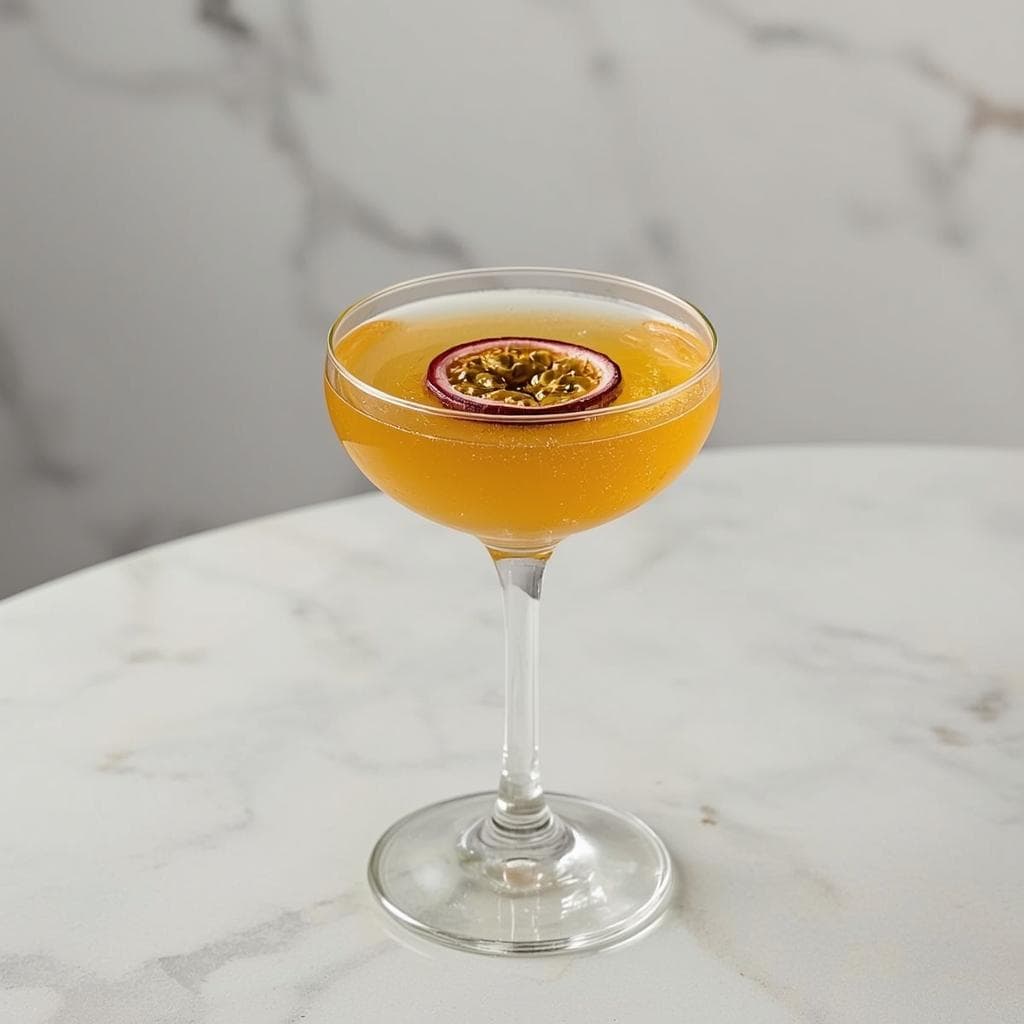
Passion Martini
A vibrant, fruit-forward Martini-style cocktail that pairs tart passion fruit with clean vodka, a whisper of vanilla, and fresh lime for snap. It’s silky, perfumed and served ice-cold in a chilled coupe.
History of Passion Martini
Fruit-led Martini riffs swept through late-1990s and early-2000s bar culture, especially in the UK, where bright flavours and slick presentation thrived. The Passion Martini grew from that moment, pairing tropical perfume with the clean backbone of vodka. Many venues put their stamp on it, and no single origin can be pinned down with certainty. As with many modern classics, the recipe settled into a familiar structure: spirit, fruit, citrus and a measured sweetener. Passion fruit’s vivid aroma and photogenic garnish helped the drink spread quickly across cocktail lists. Its popularity was cemented by the rise of high-energy, lounge-style bars where shaken up drinks set the tone. Today it remains a crowd favourite because it is both accessible and expressive. The methodology is straightforward, yet small tweaks offer noticeable results. It is a reliable gateway for guests moving from long drinks to elegant, stemmed serves.
Why the Passion Martini Works
Vodka gives a clean canvas that lets passion fruit shine, while a touch of vanilla rounds the tropical notes without cloying. Fresh lime reins in sweetness and sharpens the aromatics, and a hard shake adds chill, aeration and just enough dilution. Fine straining yields a glossy texture and an elegant, seed-free finish. Passion fruit purée supplies body and aroma, which benefits from being shaken to integrate with the spirit. The liqueur bridges fruit and spirit, adding depth that purée alone cannot provide. Balancing these with citrus keeps the drink bright rather than heavy. Chilling the glass preserves the temperature and prevents rapid dilution in the first few sips. The garnish perfumes each sip and signals the flavour. The overall structure lands sweet-tart with a lingering, lightly floral finish.
Should You Mix Ahead?
For parties, pre-mix the vodka, passion fruit liqueur, passion fruit purée and vanilla syrup in a bottle and chill well. Hold back the lime juice to add fresh when shaking each portion. This preserves brightness and prevents the mix from dulling. When batching, calculate 1.5 to 2 ounces of total dilution per single-serve and add that only if you plan to bottle-serve without shaking. If you will still shake each drink to order, skip pre-dilution. Keep the batch in the fridge and use within two days. Always chill your glassware ahead of service, especially for up drinks. Label the batched bottle with ratios and a date so you can reproduce results. Give the bottle a brisk shake before measuring to re-integrate the purée.
Food & Snack Pairings
The drink’s sweet-tart profile flatters salty snacks like crisps, olives and toasted nuts. The salt sharpens the fruit and resets the palate between sips. It is also strong enough to stand next to bold flavours without being overwhelmed. Spicy, citrus-led dishes such as chilli prawns, fish tacos or sesame chicken pair well. The tropical notes offer relief from spice while lime keeps everything lively. Avoid overly creamy sauces which can blunt the acidity. For dessert, try fruit tarts, pavlova or a scoop of vanilla ice cream. Vanilla in the drink echoes dessert notes without becoming heavy. Chocolate can work if it’s on the lighter, milk side rather than dark and bitter.
How to Make Passion Martini
Chill a coupe well so the drink stays cold and glossy. Measure your ingredients accurately with a jigger to keep the balance consistent. Fresh lime juice makes a noticeable difference. Add vodka, passion fruit liqueur, passion fruit purée, vanilla syrup and lime juice to a shaker with plenty of ice. Shake hard for 12 to 15 seconds until the tin is frosty. Hard shaking aerates and integrates the purée for a fine texture. Double strain through a Hawthorne and fine strainer into the chilled coupe. Garnish with half a fresh passion fruit, cut side up. Serve immediately while ice-cold.
When to Serve
Serve as a bright opener for summer evenings when something fruity and polished sets the mood. It suits garden parties and celebrations where a splash of colour is welcome. Early evening is ideal while palates are fresh. It works indoors during cooler months as a tropical mood-lifter. The perfume and sweetness feel festive without being heavy. Late-night service is also popular thanks to its easy, approachable profile. Its name and colour make it a playful choice for Valentine’s Day or anniversaries. It also shines at birthdays and brunches where you can pre-chill and pour swiftly. Keep coupes cold and garnishes ready.
Common Mistakes
Over-sweetening is common, especially with sugary purées. Taste your purée and adjust the vanilla syrup accordingly, or add a touch more lime. Aim for a vivid but balanced sweet-tart finish.
Under-shaking leads to a dull, warm texture and poor integration. Shake hard with plenty of ice until the tin frosts and the sound softens. Always fine strain to remove ice shards and seeds.
Skipping the chilled glass robs the drink of its polish. Keep coupes in the freezer and move quickly from shake to pour. If your passion fruit is underripe, express a lime peel over the top to add aroma.
Recommended
Best vodka for Passion Martini
Choose a clean, neutral vodka so the passion fruit leads the aroma. A standard 40 percent strength works well for texture and dilution when shaken. Avoid overly characterful styles that could mask the fruit.
Best liqueur for Passion Martini
A passion fruit liqueur should be aromatic with balanced sweetness, not syrupy. It acts as a bridge between purée and spirit, adding depth that juice alone cannot provide. Taste it on its own so you can adjust syrup accordingly.
Taste Profile
Ingredients
Instructions
Chill the glass
Place a coupe in the freezer or pack it with ice and water to chill thoroughly.
Build in the shaker
Add vodka, passion fruit liqueur, passion fruit purée, vanilla syrup and fresh lime juice to a shaker.
Shake hard
Fill the shaker with ice and shake vigorously until the tin frosts and the sound softens.
Double strain
Discard ice from the glass, then strain through a Hawthorne and fine strainer into the chilled coupe.
Garnish and serve
Float half a fresh passion fruit, cut side up, on the surface and serve immediately.
Bartender Tips
Taste your purée
Passion fruit purées vary widely. If yours is very sweet, reduce the vanilla syrup slightly or increase lime by a small splash.
Shake like you mean it
A hard shake integrates purée and spirit and adds micro-aeration for a sleek texture. Under-shaking makes the drink seem flat and warm.
Chill everything
A frozen coupe and fresh ice keep the serve crisp for longer. Move quickly from shake to pour to preserve temperature.
Swap the vodka and liqueur for a zero-alcohol spirit with a clean profile and a passion fruit cordial. Keep the purée, lime and vanilla syrup the same to preserve the drink’s structure. Shake hard with plenty of ice and fine strain to keep the same texture and gloss. If you lack a non-alcoholic spirit, build a concentrated base by combining strong brewed white tea with a little extra vanilla syrup and passion fruit purée. The tea provides backbone and a gentle tannic grip, mimicking the structure alcohol would provide. Adjust sweetness to taste, as cordials and purées vary. Serve in a chilled coupe with the same garnish to keep the theatre. The result will be slightly lighter on the palate but still perfumed and satisfying. It’s an excellent option for daytime gatherings or guests avoiding alcohol.
Similar Drinks
Frequently Asked Questions
What ingredients make the best Passion Martini?
Use a clean, neutral vodka, ripe passion fruit purée, and a balanced passion fruit liqueur for depth. Freshly squeezed lime and a measured pour of vanilla syrup keep the profile vivid rather than cloying. Taste your purée first and adjust sweetness to suit.
How should I shake and strain it for the right texture?
Shake hard with plenty of ice for 12 to 15 seconds to chill, dilute and aerate the purée. Double strain through a Hawthorne and a fine strainer to catch seeds and ice chips. This yields a glossy, seed-free finish.
How strong does it feel and when should I serve it?
It drinks medium-strong: bright, silky and around the strength of a typical Martini riff. Serve as a summery opener or a party crowd-pleaser when you want colour and perfume without heaviness. Keep glassware chilled so the first sips sing.
Can I batch it and what foods pair well?
Yes: pre-mix spirit, liqueur, purée and syrup, chill, and add lime when shaking each serve. Pair with salty snacks, spicy small plates or fruit-led desserts, which echo the drink’s tropical notes. If a batch tastes flat, increase lime by small increments.
Hangover Risk
Risk Level
Hangover risk based on alcohol type, content, and serving size: 3/5. Always drink responsibly.
Recipe Rating
Based on 3 reviews