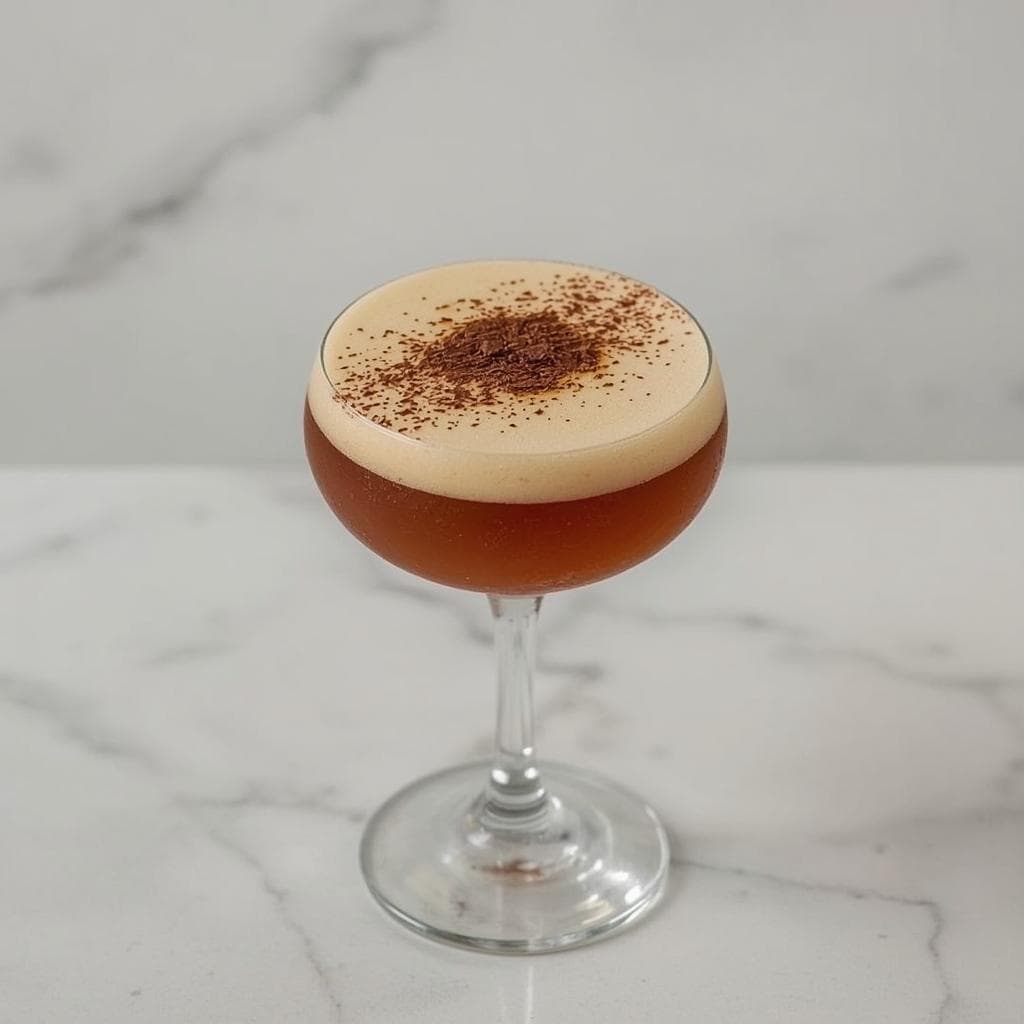
Pardo
A smoky-agave coffee sour with a plush foam, lifted by lemon and rounded with agave nectar. Rich, aromatic and evening-perfect, it drinks like a refined dessert with backbone.
History of Pardo
The Pardo is a modern bar-room invention that marries agave spirits with coffee’s roasted depth. Its name nods to the Spanish word for a brownish shade, a clue to both colour and mood. Precise origins are murky, as many bartenders have riffed on coffee sours in the last decade. This version borrows from Mexico’s love of coffee and agave while following contemporary sour structure. Where older coffee drinks leaned creamy or hot, the Pardo is shaken cold and finished with a fine, satiny foam. The result feels current: familiar flavours set in a lighter, more aromatic frame. Like many new classics, it spread through word-of-mouth and menus rather than a single credited bar. The building blocks are timeless—spirit, citrus, sweetener—yet the roasted note makes it feel novel. That balance of comfort and character explains its quiet staying power.
Why the Pardo Works
Split agave base supplies smoke and vanilla while coffee brings roasted bitterness that acts like bitters in stereo. Lemon brightens and reins in sweetness from the liqueur and agave nectar, making the finish clean rather than cloying. An egg white shake creates micro-foam that carries aroma and softens edges. The texture makes the drink feel generous without becoming heavy, letting the roast note linger elegantly. Chocolate bitters add a quiet cocoa bassline that flatters both agave and coffee. A twist of orange expresses volatile oils that pop on the foam, giving you brightness on the nose before the sip turns plush.
Should You Mix Ahead?
Pre-batch the base without espresso, lemon, or egg white if you like: combine tequila, mezcal, coffee liqueur and agave nectar and keep it chilled. This preserves balance while avoiding oxidation of fresh juice. Add measured lemon, freshly pulled espresso and egg white to order. If you must pre-squeeze citrus, do it the same day and refrigerate tightly covered. The espresso should be brewed just before shaking and allowed to cool for a minute to avoid excessive melt. Foam deteriorates in a batch, so keep that step à la minute. For events, store the spirit-sweetener mix in the freezer to reduce shake time. Use larger, colder ice to control dilution. Shake individual portions to achieve the proper texture and aromatics.
Food & Snack Pairings
Dark chocolate truffles and flourless chocolate cake mirror the cocoa notes and make the drink feel like a composed dessert. A pinch of sea salt on the sweet bites sharpens contrast. The orange zest in the garnish bridges citrus-based puddings too. Cinnamon-dusted churros or shortbread biscuits bring buttery crunch that flatters the foam. The roasted coffee element loves browned edges and caramel tones. Keep the sweets modest so the drink doesn’t turn cloying. For savoury options, try aged cheeses with nutty profiles or roasted nuts. The smoke from mezcal and the coffee bitterness cut through fat elegantly. Salty snacks amplify aroma and make each sip feel brighter.
How to Make Pardo
Chill a coupe. Pull a fresh espresso and let it stand for a minute so it is hot but not steaming; this prevents runaway dilution. Measure all ingredients carefully to maintain balance. Add tequila, mezcal, coffee liqueur, lemon juice, agave nectar and egg white to a shaker. Dry shake hard for 10 seconds to build foam and start emulsification. Add plenty of solid ice and shake again until the tin is frosty. Fine strain into the chilled coupe for a smooth top. Express an orange peel over the foam and discard or drop in. Finish with a light grating of dark chocolate.
When to Serve
Best after dinner when you want dessert energy without a heavy plate. The roasted profile also suits late evenings where conversation lingers. It’s a natural closer for a tasting menu. Autumn and winter are ideal, as the smoke and chocolate notes feel cosy. It also works on Bonfire Night, where the aroma plays well with crisp air. Keep it very cold so the finish stays clean. Brunch is possible for coffee lovers, though the drink is stronger than it tastes. Serve smaller coupes if offering alongside pastries. One round is usually enough.
Common Mistakes
Shaking with scalding espresso melts ice too quickly and thins the foam. Let the shot cool briefly before building the drink. This keeps texture tight and the finish crisp.
Skipping the dry shake yields a flat top and weak integration. Always shake once without ice to form structure, then again with ice for chill and dilution. Fine strain to prevent ice shards from puncturing the foam.
Over-sweetening to mask bitterness makes the drink heavy. Respect the measured agave and liqueur; adjust with a few extra drops of lemon if needed. Smell your orange twist before serving to ensure lively aromatics.
Recommended
Best tequila for Pardo
A reposado tequila works best, providing gentle vanilla and spice from brief ageing that complements coffee’s roast. Avoid overly woody expressions that can dominate the citrus and foam. A clean agave core keeps the drink bright.
Best mezcal for Pardo
Choose a moderately smoky espadín style to add earth and lift without turning the drink into a smoke bomb. The goal is accent, not takeover. A clean finish lets the orange oils and cocoa bitters register.
Best liqueur for Pardo
A coffee liqueur with true coffee aroma and restrained sweetness is ideal. Excess sugar will flatten the citrus and make the foam feel heavy. Taste for a clean, roasted finish without syrupy aftertaste.
Taste Profile
Ingredients
Instructions
Chill and prep
Chill a coupe. Pull a fresh espresso shot and let it stand for about a minute so it is hot but not steaming.
Dry shake
Add tequila, mezcal, coffee liqueur, lemon juice, agave nectar and egg white to a shaker. Dry shake hard for 10 seconds to build foam.
Shake with ice
Open the tin, add plenty of cold, solid ice and shake vigorously until the outside frosts.
Strain and garnish
Fine strain into the chilled coupe. Express the orange peel over the foam, then discard or place on the rim. Finish with a whisper of grated dark chocolate.
Bartender Tips
Cool the espresso briefly
A one-minute rest reduces steam so ice doesn’t melt too fast, preserving foam and balance.
Measure sweeteners precisely
Both coffee liqueur and agave add sugar; keep to spec, then adjust with a few drops of lemon if needed.
Use fresh citrus and a fine strain
Fresh juice keeps the finish bright and a fine strain prevents ice chips from puncturing the foam.
Use a zero-alcohol agave alternative and a non-alcoholic coffee liqueur to keep the roasted-sweet balance intact. Fresh espresso carries the flavour, so the drink remains satisfying without ethanol. Keep the citrus and syrup exactly the same to preserve structure. Texture still matters. Dry shake the egg white to build foam, then shake again with ice for proper dilution and chill. If you prefer to keep it vegan, swap the egg white for aquafaba in the same volume. Aromatic bitters usually contain alcohol, so choose an alcohol-free chocolate-style bitters or skip them entirely and rely on an orange twist for fragrance. The result is softer but still layered. Serve as cold as possible to keep the finish crisp.
Similar Drinks
Frequently Asked Questions
What type of agave spirits and coffee should I use for the Pardo?
Choose a mellow reposado tequila for body and a clean, moderately smoky mezcal to add depth without overwhelming the cup. Pull a fresh, medium-roast espresso with balanced acidity and minimal ashiness. The coffee liqueur should be aromatically robust and not overly sugary.
How do I get the best texture and foam?
Dry shake the mix with the egg white first to build a stable foam, then shake again with plenty of cold, solid ice. Fine strain into a chilled coupe for a satin surface. Express orange oils over the top to boost aroma without adding weight.
How strong does it feel and when should I serve it?
Despite a measured ABV, the Pardo drinks softer thanks to foam and citrus, so it can sneak up on you. It shines as a digestif, after a rich meal or during cool-weather evenings. Serve very cold so the finish stays tidy and refreshing.
Can I make it ahead or batch it for guests, and what pairs well with it?
Pre-batch the spirits and syrup only, keeping citrus, espresso and egg white for the moment of service. Pair with dark chocolate, nutty biscuits, aged cheese or roasted nuts to echo the roasted notes. If a batch skews sweet, correct with measured lemon just before shaking.
Hangover Risk
Risk Level
Hangover risk based on alcohol type, content, and serving size: 3/5. Always drink responsibly.
Recipe Rating
Based on 2 reviews