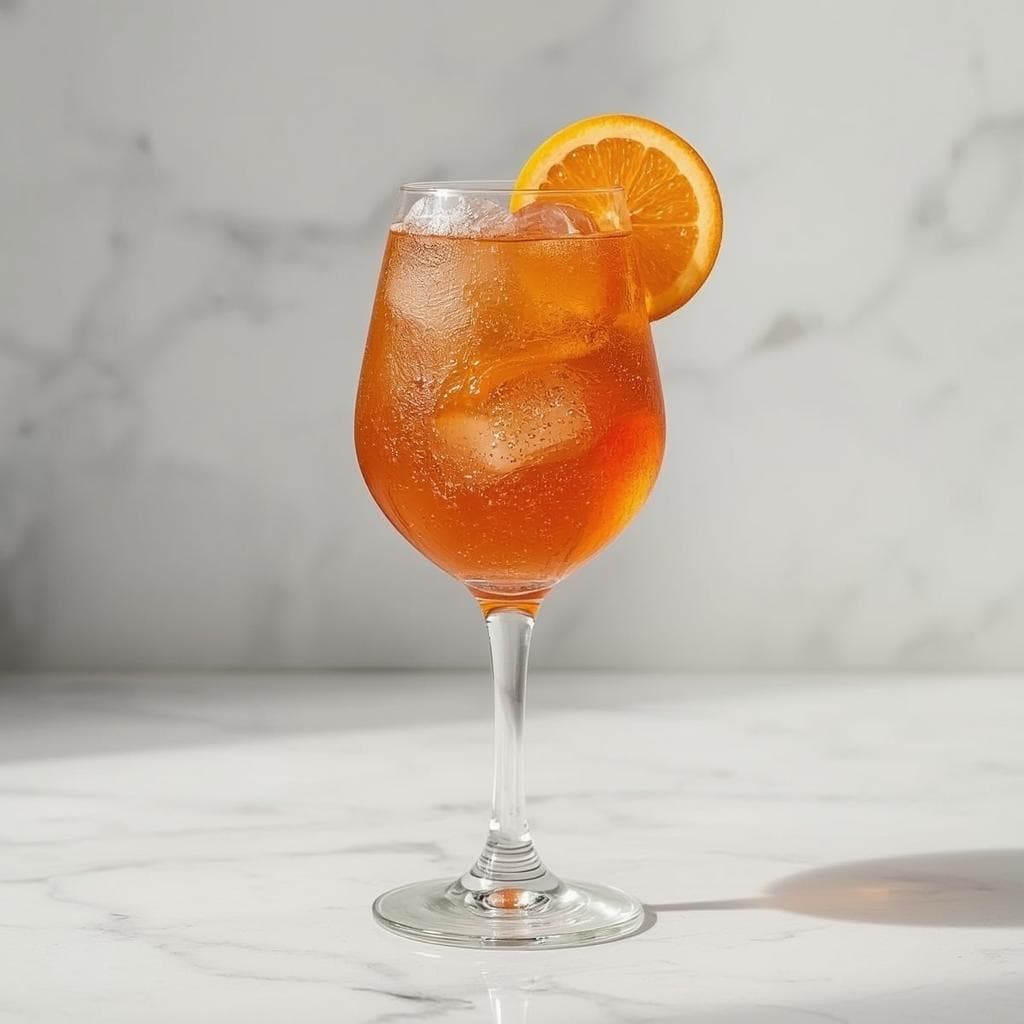
Orange Spritz
A bright, gently bitter spritz that leans into sun‑ripe orange. Bitter orange apéritif, prosecco and a lift of soda meet a splash of fresh orange juice for extra juiciness. Built over ice in a stemmed wine glass, it’s an easy, sparkling apéritif.
History of Orange Spritz
The spritz traces back to the Veneto, where visitors lightened local wine with a splash of water. Over time, sparkling wine replaced still, and bittersweet liqueurs brought colour and aroma. The modern spritz became a ritual of the Italian aperitivo, more about mood than ceremony. An orange-driven take naturally followed, given the popularity of bitter orange apéritifs. Bartenders leaned into the fruit’s zest and pith, pairing it with prosecco’s lift and a final spritz of soda. The version here adds a small measure of fresh orange juice, amplifying the fruit without tipping the drink too sweet. Exact origins of the Orange Spritz are hazy, as countless cafés and bars tweak their spritzes with seasonal fruit. What endures is the structure: bittersweet base, sparkling wine, soda, and abundant ice. The style thrives because it invites gentle customisation while staying bright and low in strength.
Why the Orange Spritz Works
Aperitif bitterness frames the fruit, prosecco provides lift, and soda eases the palate. The trio creates a refreshing, low‑effort balance that reads bright rather than sharp. A splash of fresh orange juice softens the edges and deepens aroma without flattening bubbles. It rounds sweetness just enough, while the pithy notes of the apéritif keep the drink from feeling sugary. Building over fresh ice keeps dilution gentle and the finish crisp. A light stir integrates without scrubbing away carbonation, so each sip stays lively.
Should You Mix Ahead?
You can premix the bitter orange apéritif and fresh orange juice in a small bottle and keep it chilled for a few hours. This speeds service and ensures consistent ratios. Do not add prosecco or soda to the batch; both should be added at the moment of serving. Chill your glasses and all components in the fridge to reduce melt. Cold liquid foams less and holds bubbles longer, so the first pour is cleaner. If batching the base, label the bottle with the ratio to avoid guesswork mid‑service. For parties, set a spritz station: ice, pre-chilled base, prosecco, soda and garnishes. Briefly train helpers to pour prosecco first, then top with soda, and stir once. This keeps texture lively across multiple servings.
Food & Snack Pairings
Salty snacks are the spritz’s best friend: green olives, salted almonds and crisps cut through sweetness and amplify the bubbles. The citrusy nose also flatters simple crostini with tomato or anchovy. Keep flavours direct and not too spicy. Seafood works beautifully. Grilled prawns, calamari or cured salmon find a bright counterpoint in the orange and sparkle. Lightly dressed leaves with fennel or radish provide crunch without competing. For something heartier, try prosciutto with melon, mild cheeses, or herb flatbreads. The drink’s modest bitterness refreshes between bites, keeping the palate ready. Avoid heavy cream sauces that can dull the spritz’s lift.
How to Make Orange Spritz
Chill a stemmed wine glass and all ingredients. Fill the glass to the brim with fresh, solid ice; this reduces rapid melt and preserves fizz. Measure accurately with a jigger for balance. Add the bitter orange apéritif and the fresh orange juice over the ice. Pour in the prosecco next to integrate without sputter. Top with soda water, aiming down the inside of the glass. Give one gentle turn with a bar spoon to marry without scrubbing bubbles. Garnish with a fresh orange wheel, expressing a touch of zest over the surface if you like. Serve immediately while lively.
When to Serve
Serve as an apéritif before dinner when you want appetite-whetting brightness without heft. It’s perfect for summer evenings and al fresco starts. The light bitterness cues the palate for savoury courses. Brunch and daytime gatherings suit it well, thanks to the low strength and gentle fruit. It refreshes without dominating, even under the sun. Keep batches cold and serve steadily rather than all at once. Consider it for garden parties, picnics and weddings where simple, consistent service matters. The drink photographs beautifully and pleases a broad crowd. Offer a zero-proof option alongside to keep everyone included.
Common Mistakes
Over-dilution is the top error. Use plenty of fresh, hard ice and pre-chill your ingredients so the first sips stay focused and bubbly. Avoid crushed ice, which melts too quickly.
Heavy stirring knocks out carbonation. Stir just once to integrate and never shake. Pour prosecco before soda to minimise foaming and keep texture tight.
Ratios matter. Too much juice turns the drink flabby, while too little apéritif loses the bittersweet spine. Keep the juice to a modest splash and measure with a jigger.
Recommended
Best amaro for Orange Spritz
Choose a bitter orange apéritif in the lower-ABV range so the drink stays light and easy. Look for a profile that balances sweet peel with pithy bitterness and gentle herbs. Overly heavy, resinous amaros can dominate and feel sticky.
Best wine for Orange Spritz
Use a dry or extra dry prosecco with lively but fine bubbles. Avoid overly sweet styles, which can push the drink into cloying territory when combined with orange notes.
Taste Profile
Ingredients
Instructions
Chill and ice
Chill a stemmed wine glass. Fill it to the top with fresh, solid ice cubes.
Add base
Pour in the bitter orange apéritif and the fresh orange juice.
Add bubbles
Add the prosecco, then top with soda water, pouring down the side of the glass.
Stir and garnish
Give one gentle turn with a bar spoon to integrate. Garnish with an orange wheel and serve immediately.
Bartender Tips
Keep it cold
Chill prosecco, apéritif and glassware to reduce melt and preserve bubbles. Fresh, hard ice is essential.
Mind the ratio
Keep the juice to a modest splash so the apéritif’s bittersweet character remains in charge. Too much juice flattens the drink.
Gentle integration
Stir only once to combine. Over-stirring knocks out carbonation and dulls the texture.
For an alcohol-free version, use a non-alcoholic bitter orange aperitif and dealcoholised sparkling wine. Keep the same ratios and retain the splash of fresh orange juice for aroma and colour. Top with chilled soda and build over plenty of ice for lift. Chill every component thoroughly to preserve bubbles and keep dilution gentle. A brief, soft stir is enough to integrate without scrubbing carbonation. The result remains zesty, lightly bitter and refreshing, with a clean, dry finish. If you lack dealcoholised sparkling wine, lengthen the zero-proof aperitif with extra soda and a squeeze of lemon for edge. Adjust sweetness with a few drops of simple syrup only if needed. Garnish boldly with an orange wheel to bring the nose forward.
Similar Drinks
Frequently Asked Questions
Which ingredients make the best Orange Spritz?
Choose a bitter orange apéritif with moderate sweetness and an ABV around 11–15% for balance. Pair with a dry or extra dry prosecco so the drink finishes crisp rather than cloying. Freshly squeezed orange juice adds aroma and colour without excess sugar.
Should I shake or stir a spritz, and in what order do I pour?
Build directly in a chilled wine glass over plenty of ice. Add the apéritif and juice, then prosecco, then top with soda and give one gentle stir to integrate. This order preserves bubbles and prevents foaming.
How strong does an Orange Spritz feel, and can I adjust it?
It drinks light and refreshing, roughly 8% ABV, about a drink and a half in UK units. To make it lighter, add a touch more soda; to make it drier, skip the juice. Keep bitterness and sweetness in check by sticking close to the stated ratios.
Can I batch this for a party, and what foods pair well?
Batch the apéritif and juice only, keep it chilled, and add prosecco and soda to order. Serve with olives, salted nuts, crisps, grilled prawns or simple crostini; the bubbles and citrus handle salt beautifully. Avoid heavy creamy dishes that flatten the sparkle.
Hangover Risk
Risk Level
Hangover risk based on alcohol type, content, and serving size: 2/5. Always drink responsibly.
Recipe Rating
Based on 2 reviews