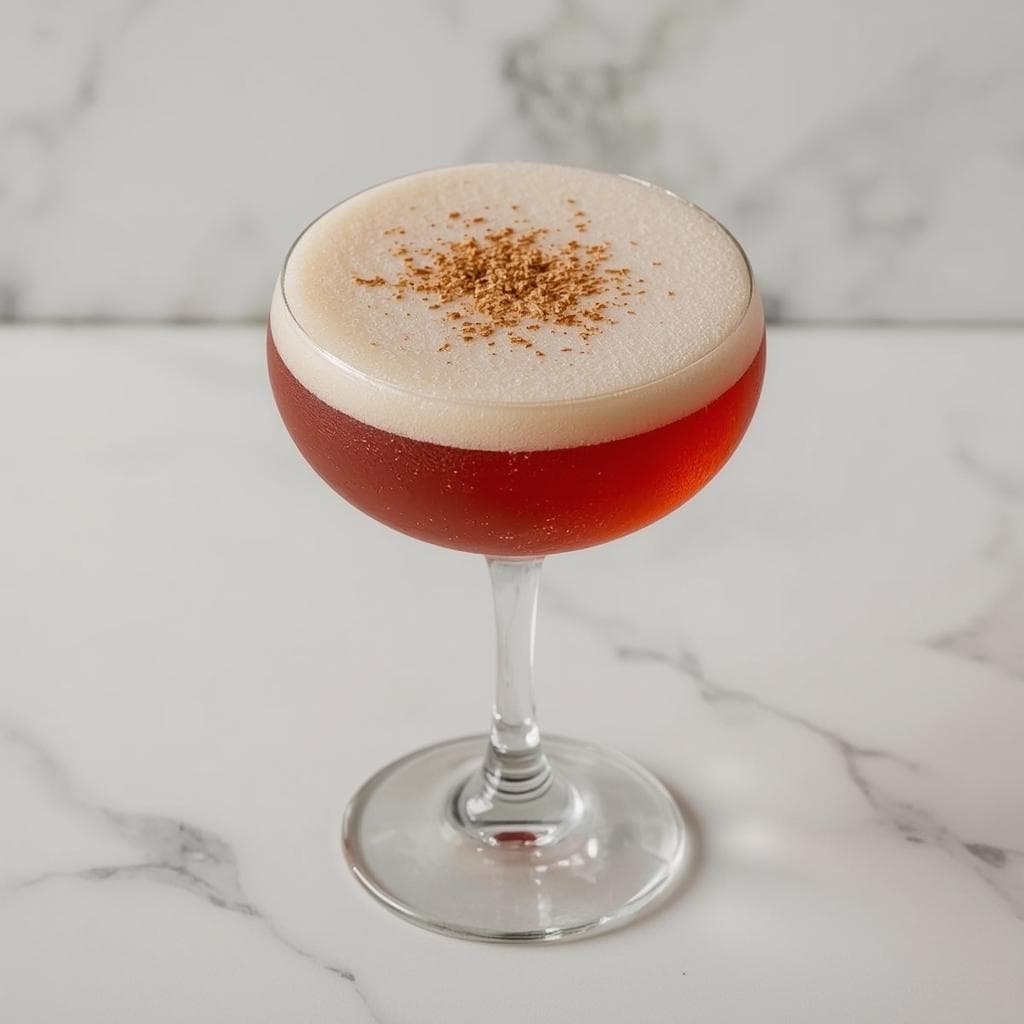
Negroni Flip
A lush, wintry take on the classic Negroni, shaken with a whole egg for silk and a tight foam, then dusted with nutmeg.
History of Negroni Flip
The Negroni Flip marries two old traditions: the Italian aperitivo icon and the Anglo-American flip. While the Negroni dates to early twentieth-century Florence, flips reach back centuries as warming, egg-enriched drinks. The exact origin of combining the two is unclear, likely emerging from modern craft bars exploring texture-driven twists. Bartenders discovered that the whole egg rounds the Negroni’s assertive bitterness without burying its herbal core. The result is a drink that reads indulgent yet grown-up, with spice on the nose and a satin palate. It moved quickly from bartender’s handshake to off-menu favourite in colder months. As with many contemporary variations, there is no single inventor or canonical spec. Equal parts remain the anchor, but glassware, garnish, and shaking style vary slightly. The through-line is elegance: a familiar flavour set wearing winter clothes.
Why the Negroni Flip Works
Equal parts gin, sweet vermouth, and bitter aperitivo offer a proven balance of botanicals, sweetness, and bitterness. The whole egg emulsifies, adding body and smoothing edges while trapping aromatic compounds in the foam. A dry shake then a hard shake with ice achieves fine texture and proper dilution. This two-stage approach builds microfoam and keeps the drink cold without watering it down. Nutmeg completes the profile with gentle warmth and aroma. The garnish reads through the foam and frames the bitter orange and herbal notes, keeping the drink decadent but poised.
Should You Mix Ahead?
Do not pre-mix with egg. Instead, pre-batch the spirits in equal parts and keep the bottle in the fridge or freezer so it is very cold. This speeds service and ensures consistent dilution when you shake to order. If batching the spirits, aim for small volumes consumed within one week, as vermouth is wine-based and loses freshness. Label the batch date and keep it sealed to minimise oxidation. At service, measure 3 ounces of the chilled batch and add the egg to the shaker. Dry shake, add ice, shake hard, and strain. Garnish to order with fresh nutmeg for maximum aroma.
Food & Snack Pairings
Salty snacks love this drink. Try roasted almonds, Parmigiano-style hard cheese, or crisps dusted with black pepper to echo the spice and cut through richness. Cured meats such as bresaola or salami pair well with the bitter-orange notes, while the egg’s creaminess softens salt and fat. A few briny olives provide a sharp, palate-waking contrast. For a sweet-leaning nibble, dark chocolate with orange peel or a spiced ginger biscuit mirrors the drink’s warmth without overwhelming it. Keep portions small; the cocktail carries weight.
How to Make Negroni Flip
Chill a coupe. Add gin, sweet vermouth, bitter aperitivo, and a whole egg to a shaker. Dry shake vigorously for 10–12 seconds to emulsify. Open the shaker, add plenty of cold ice, and shake hard for 12–15 seconds until the tin is frosted. The goal is fine foam and proper dilution, not a slushy texture. Double strain into the chilled coupe to remove ice shards and any larger bubbles. Finely grate nutmeg over the foam, then serve immediately while the head is tight.
When to Serve
Best in winter when richer textures feel right, especially after supper. It also works as a fireside sipper when you want the Negroni’s flavour but with softer edges. Serve at the end of a dinner party as a dessert-adjacent closer. It performs well at intimate gatherings where you can shake to order. Avoid hot afternoons or large crowds where batching with egg would be unsafe. Choose calm, cooler evenings and smaller groups.
Common Mistakes
Skipping the dry shake leads to thin texture and weak foam. Always emulsify the egg first, then add ice for chilling and dilution.
Under-shaking with ice results in a warm, flabby drink. Shake hard until the tin frosts, then double strain to refine the mouthfeel.
Using warm or old eggs can cause sulphury aromas and poor structure. Use fresh, cold eggs, crack into a separate vessel to avoid shell, and discard any with off smells.
Recommended
Best gin for Negroni Flip
Look for a gin with firm juniper, bright citrus, and a clean, dry finish. The egg softens edges, so a confident botanical core keeps the drink from feeling flabby.
Best vermouth for Negroni Flip
Choose a fresh, well-kept sweet vermouth with balanced spice, cocoa, and gentle vanilla. Oxidised vermouth dulls the drink and exaggerates bitterness.
Best amaro for Negroni Flip
Use a bright red, orange-forward bitter aperitivo with medium bitterness and clear herbal lift. It supplies colour and the signature Negroni snap.
Taste Profile
Ingredients
Instructions
Chill glass and set up
Place a coupe in the freezer to chill. Assemble all ingredients and tools before you start shaking.
Dry shake
Add gin, sweet vermouth, bitter aperitivo, and the whole egg to the shaker. Seal and dry shake vigorously to emulsify.
Shake with ice
Open the tin, add plenty of fresh ice, reseal, and shake hard until the shaker is well frosted.
Double strain
Fine strain into the chilled coupe to remove ice shards and smooth the foam.
Garnish and serve
Grate a light dusting of fresh nutmeg over the foam and serve immediately.
Bartender Tips
Use very cold ingredients
Chill the spirits and your glassware. Cold inputs help build finer foam and prevent over-dilution during the wet shake.
Crack the egg into a side cup
Crack into a separate vessel to avoid shell fragments and assess freshness before adding to the shaker.
Mind your dilution
Shake hard but not endlessly; aim for a frosted tin and a satin pour. Over-shaking thins the texture and washes out flavour.
To make an alcohol-free Negroni Flip, use a juniper-forward zero-proof spirit, a non-alcoholic red aperitivo, and an alcohol-free sweet vermouth analogue in equal parts. Keep the whole egg for texture. Dry shake, then shake hard with ice, and garnish with nutmeg. Zero-proof products can taste thinner, so consider a very small pinch of salt and a barspoon of strong black tea to deepen tannin. If sweetness is high, reduce the vermouth analogue slightly and add a splash of chilled water to maintain dilution. Keep the serve in a small coupe to preserve intensity. The feel should be lush and creamy, with bitter-orange aromatics and spice on the nose. Expect a gentler bite and a shorter finish, but a similar winter-evening mood. Serve just as cold as the alcoholic version to keep the foam tight.
Similar Drinks
Frequently Asked Questions
Which gin and vermouth styles work best in a Negroni Flip?
Choose a juniper-forward gin with clean citrus to stand up to the egg’s richness. A balanced, red sweet vermouth with spice and gentle vanilla complements the bitter aperitivo without making the drink cloying.
Why dry shake first, and how long should I shake?
Dry shaking emulsifies the egg and traps air, building the foam that defines a flip. After 10–12 seconds dry, add ice and shake hard for 12–15 seconds to chill and reach the right dilution.
How strong does it taste compared to a classic Negroni?
It drinks slightly softer despite similar base spirits because the egg rounds the edges and the foam moderates bitterness. The perceived strength is medium-high rather than punchy, with a longer, creamier finish.
Can I batch this for a party, and when should I serve it?
Batch only the spirits and keep them very cold; add the egg and shake to order for safety and texture. Serve after dinner in winter or on cool evenings when a plush, dessert-like cocktail fits the mood.
Hangover Risk
Risk Level
Hangover risk based on alcohol type, content, and serving size: 3/5. Always drink responsibly.
Recipe Rating
Based on 2 reviews