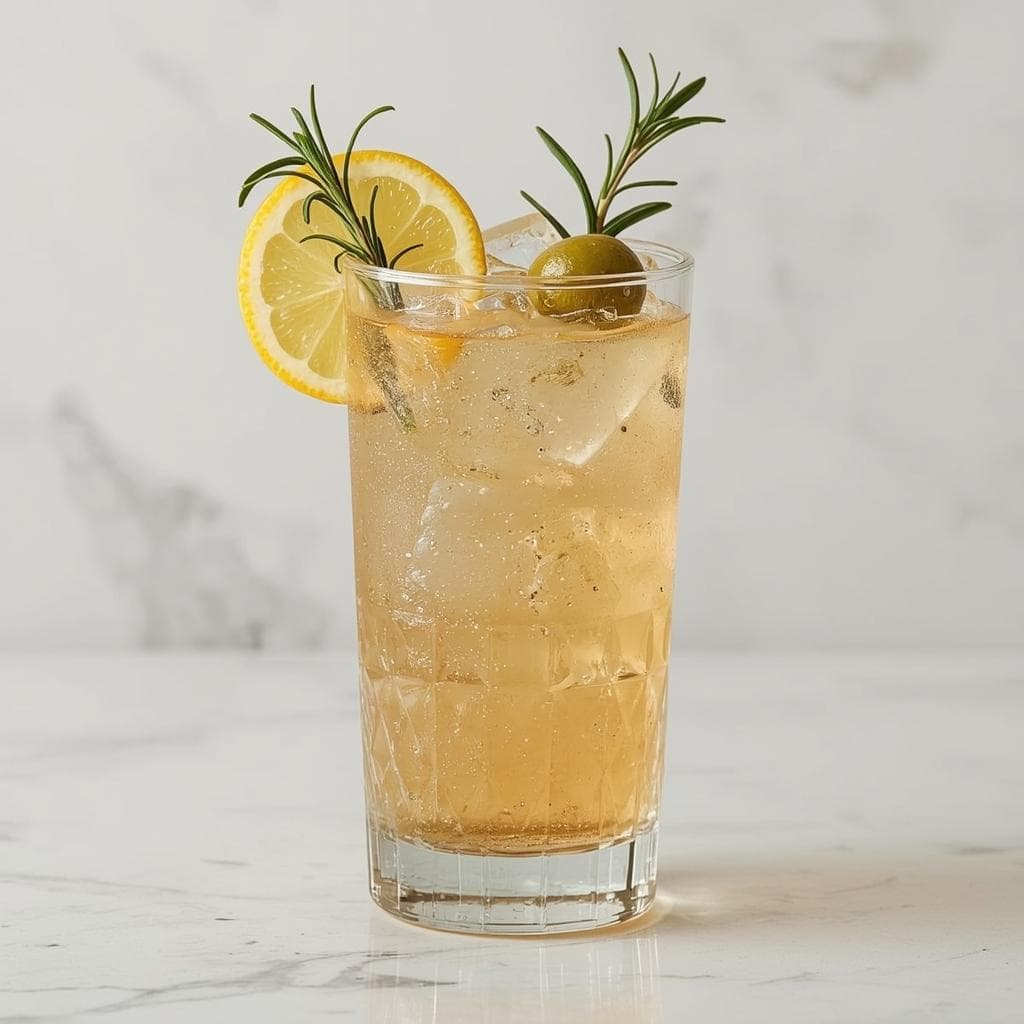
Mediterranean Buck
A sunny, herb-scented gin buck lifted with lemon and ginger beer, given a coastal twist of dry vermouth and a touch of olive brine. Crisp, savoury and sparkling, it brings seaside apéritif energy to a classic highball.
History of Mediterranean Buck
Bucks emerged in the early twentieth century as tall, fizzy drinks combining spirit, citrus and ginger. They were prized for refreshment and steadiness, bridging the gap between sours and highballs. The Moscow Mule later popularised the template globally, but the buck remained the bartender’s flexible canvas. The Mediterranean Buck is a modern riff that threads coastal flavours into the form. Dry vermouth adds herbal depth while a lick of olive brine brings savoury salinity. The idea likely took shape in contemporary bars exploring saline and herbaceous notes in spritzy serves. Exact origins are unclear, as multiple bartenders have explored similar profiles in recent years. What’s consistent is the method: keep it cold, keep it sparkling and let the ginger carry the finish. The result is a warm-weather apéritif with easy sophistication.
Why the Mediterranean Buck Works
Gin’s botanicals harmonise with dry vermouth to build a crisp, herbal backbone, while lemon brightens and frames the palate. A measured sweetness from honey syrup rounds the edges without dulling the finish. Olive brine introduces gentle salinity that heightens flavour perception. It deepens the herbal notes and pulls more aroma from both gin and vermouth, creating a savoury undertone that stays refreshing. Ginger beer delivers lift and spice, carrying citrus oils and herbal aromatics to the nose. The combination yields a focused highball with a clean line from first sip to dry, gingery finish.
Should You Mix Ahead?
Batch the alcoholic base: gin, dry vermouth, honey syrup and olive brine. Store cold in a sealed bottle for up to three days. Add fresh lemon juice and ginger beer only at service to keep the drink bright and sparkling. Pre-chill the highball glasses and the ginger beer to preserve carbonation and reduce ice melt. A very cold build reduces dilution and keeps the flavour line clean. Have garnishes prepped and kept cold and dry. For events, portion 2.75 oz of the base per serve, shake with lemon and ice, then top with 4 oz ginger beer in the glass. A gentle bar-spoon turn integrates without flattening the bubbles. Garnish immediately for the most aromatic hit.
Food & Snack Pairings
Serve with briny nibbles that echo the olive note: mixed olives, anchovy toasts or tapenade crostini. The ginger spice and citrus cut through oil-rich bites, keeping the palate refreshed. Lightly salted nuts also work well. Seafood is a natural match. Try grilled prawns, calamari with lemon, or sardines on toast. The drink’s acidity lifts the sweetness of shellfish while the vermouth adds a herbal thread. For something heartier, pair with grilled chicken skewers, herbed couscous or a Greek salad. Crisp textures and bright flavours complement the highball’s sparkle without overwhelming it.
How to Make Mediterranean Buck
Chill a highball glass and your ginger beer. Add gin, dry vermouth, lemon juice, honey syrup and olive brine to a shaker with ice. Shake briefly, about 8 to 10 seconds, to chill and dilute without over-aerating. Fine strain into the chilled highball filled with fresh ice. Top with about 4 oz cold ginger beer and give one gentle turn with a bar spoon to integrate. Float two dashes of orange bitters, then garnish with a rosemary sprig, a lemon wheel and a green olive on a pick.
When to Serve
Best as a summer apéritif before dinner when light salinity and bubbles sharpen the appetite. It also suits weekend lunches and sunny garden gatherings. Pour it for early evening terrace drinks when you want something lively but not heavy. The moderate strength keeps conversation bright. It makes an elegant welcome drink at weddings or receptions, particularly alongside coastal or Mediterranean menus.
Common Mistakes
Overdoing the olive brine can swamp the drink. Start with a modest measure and only increase in tiny increments; you want mouth-watering salinity, not a dirty martini in a highball.
Using warm ginger beer flattens the experience. Keep the mixer ice-cold and avoid aggressive stirring, which drives off carbonation.
Skipping fresh ice after shaking leads to a watery finish. Always strain over new cubes to control dilution and maintain a crisp, gingery snap.
Recommended
Best gin for Mediterranean Buck
Choose a classic, juniper-forward gin to carry through ginger and citrus. Too soft and it will disappear; too perfumed and it may clash with brine and rosemary.
Best vermouth for Mediterranean Buck
Use a dry vermouth with a fresh, herbal nose and a clean, lightly bitter finish. Oxidised bottles taste flat and will dull the drink.
Taste Profile
Ingredients
Instructions
Chill and prep
Chill a highball glass and your ginger beer. Prepare garnishes and set aside.
Shake the base
Add gin, dry vermouth, fresh lemon juice, honey syrup and olive brine to a shaker with ice.
Brief, cold shake
Shake hard for 8–10 seconds to chill and integrate without excessive dilution.
Strain and top
Fine strain into the chilled highball filled with fresh ice, then top with about 4 oz cold ginger beer.
Finish and garnish
Give one gentle bar-spoon turn to integrate. Dash orange bitters over the top, then garnish with a rosemary sprig, lemon wheel and a green olive on a pick.
Bartender Tips
Mind the brine
Start with a light touch of olive brine; you can add a few drops more to taste. It should season the drink, not dominate it.
Keep it cold
Pre-chill glass and mixer. Cold liquid holds bubbles better and reduces the need for extra shaking and dilution.
Balance the sweetness
If your ginger beer is very sweet, reduce the honey syrup to 1/4 oz. For drier brands, keep the full 1/2 oz.
To go alcohol-free, swap the gin for a non-alcoholic botanical spirit and the dry vermouth for a zero-proof aperitif or a splash of verjus. Keep the lemon, honey syrup and olive brine, then top with fiery ginger beer. The flavour remains bright, herbal and gently savoury, with similar texture and lift. Chill everything hard and build over fresh ice to protect carbonation. If your zero-proof ginger beer is very sweet, reduce the honey syrup slightly to maintain balance. A rosemary sprig still adds a vivid Mediterranean aroma. For batching, pre-mix the zero-proof base without ginger beer and lemon, chill thoroughly, then add citrus and top with ginger beer to serve. The drink remains crisp for the first several minutes if you stir gently and avoid over-icing. Garnish as usual for aromatic polish.
Similar Drinks
Frequently Asked Questions
What style of gin and ginger beer work best?
Choose a classic, juniper-forward gin to stand up to ginger and brine. Use a ginger beer with real heat but moderate sweetness; you can always adjust honey syrup to taste for balance.
Should I shake or build it in the glass?
Shake the base with ice to integrate the honey syrup and chill quickly, then strain over fresh ice and top with ginger beer. A gentle bar-spoon turn brings it together without sacrificing bubbles.
How strong does it feel and what’s the ABV like?
It drinks medium-light, with a crisp, dry finish thanks to vermouth and ginger. Expect it to sit around the single digits for ABV, with spice and citrus masking the alcohol’s edges.
Can I batch this for a party?
Yes. Pre-mix gin, vermouth, honey syrup and brine, keep it very cold, and add fresh lemon and ginger beer to order. This maintains clarity, sparkle and a defined flavour line.
Hangover Risk
Risk Level
Hangover risk based on alcohol type, content, and serving size: 2/5. Always drink responsibly.
Recipe Rating
Based on 3 reviews