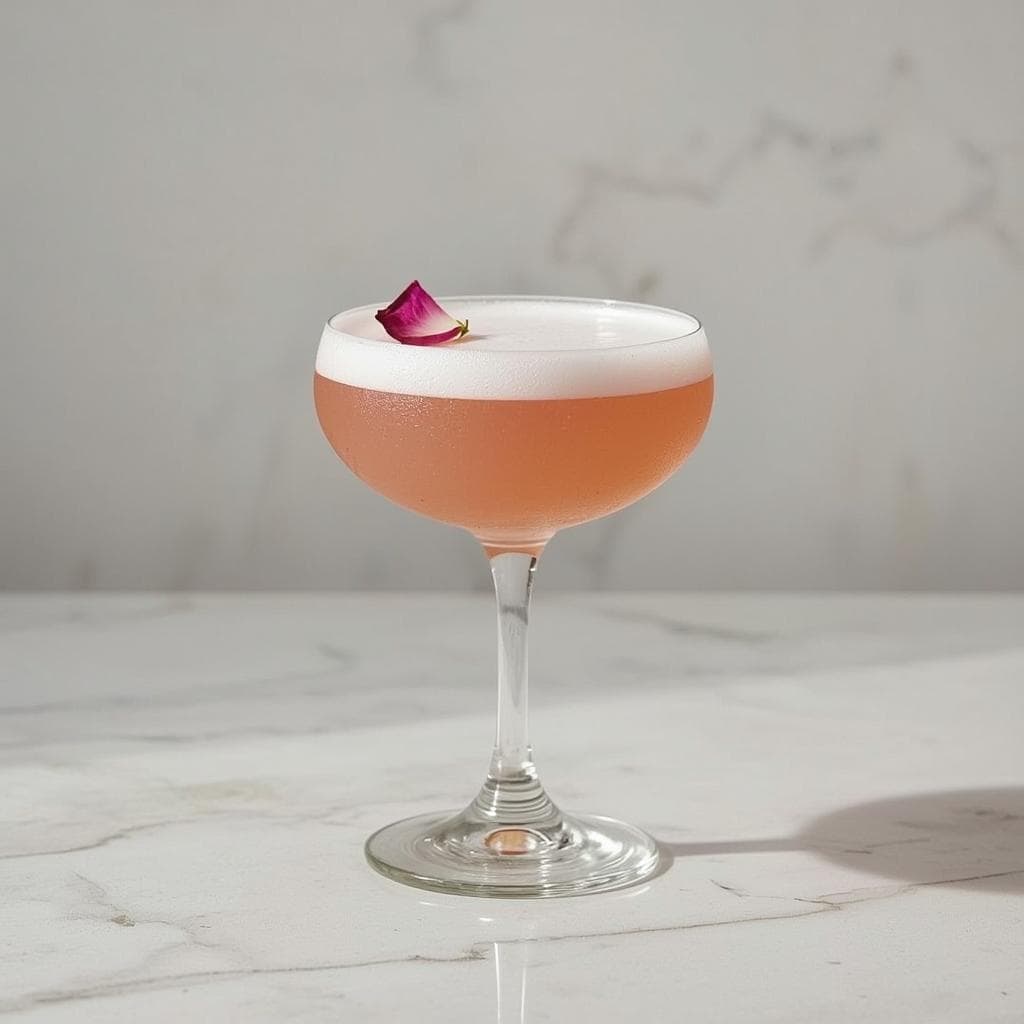
Lady Rose
A delicate gin sour kissed with raspberry and a whisper of rose. Silky, bright and gently fragrant, it’s a poised aperitif with a soft pink hue.
History of Lady Rose
The Lady Rose is a contemporary riff on the classic gin sour family, taking cues from the early 20th-century Clover Club. Its rose accent likely emerged from the modern cocktail revival, when bartenders began weaving culinary aromatics into balanced, approachable serves. Exact origins are hazy, but the drink’s structure is timeless. As cocktail bars embraced seasonality, floral ingredients found a natural home alongside citrus and berry elements. Rose water appeared in measured drops, offering perfume without sweetness. The Lady Rose leans into this approach, marrying familiar tart-sweet balance with fragrant lift. The drink gained popularity as guests sought lighter, lower-bitter aperitifs with photogenic appeal. Its pale blush colour, tight foam and elegant garnish made it a staple at spring menus and celebratory occasions. Today it sits comfortably alongside other floral sours as a modern classic.
Why the Lady Rose Works
A classic sour ratio provides the backbone: gin for crisp structure, lemon for brightness, and raspberry syrup for colour and juicy depth. A whisper of rose water adds aroma without cloying sweetness, while a touch of aquafaba creates a fine, creamy foam. Shaking first without ice whips air into the aquafaba, building a lasting head and integrating oils from the rose. The second shake with ice chills rapidly and adds just enough dilution to round the acidity and open the gin. Double straining removes ice shards and pulpy bits for a satiny texture. The result is balanced, perfumed and clean, with rose in the nose, raspberry on the mid-palate and a crisp, dry finish from the gin.
Should You Mix Ahead?
You can pre-mix the gin, raspberry syrup and rose water several hours ahead and keep chilled. Do not add lemon juice or aquafaba until service, as citrus fades and aquafaba loses foam if left sitting. For small gatherings, portion the pre-mix into a bottle and label the jiggered serve size. Shake each drink to order with fresh lemon and aquafaba to maintain brightness and texture. If batching for more than four serves, pre-chill your glassware and keep the mix over ice in the fridge. Taste a test shake before guests arrive and adjust sweetness or acidity in tiny increments.
Food & Snack Pairings
Pair with goat’s cheese crostini, smoked salmon blinis or cucumber sandwiches. The drink’s acidity cuts richness while the rose lifts delicate flavours. Light desserts such as lemon tarts, vanilla panna cotta or raspberry macarons echo the drink’s citrus and berry notes without overwhelming it. Avoid heavy chocolate that can smother the perfume. For snacks, choose salted almonds, herbed olives or lightly spiced crisps. The savoury edge keeps the palate lively between sips.
How to Make Lady Rose
Chill a coupe. Add gin, lemon juice, raspberry syrup, simple syrup, rose water and aquafaba to a shaker. Dry shake vigorously for 10 to 12 seconds to build foam. Add plenty of cold ice and shake hard for a further 8 to 10 seconds until the tin is frosted. This rapid chill gives clean dilution and a tighter texture. Double strain into the chilled coupe to catch ice shards and any pulp. Garnish with a single edible rose petal at the rim and serve immediately.
When to Serve
Serve as an aperitif before dinner when you want bright acidity and a gentle lift. It opens the palate without overwhelming it. Perfect for spring gatherings, wedding showers and garden parties thanks to its colour and perfume. It also plays well at brunch when you prefer a shorter, more polished option. Choose it for date nights or Valentine’s Day when something elegant and fragrant sets the tone. The presentation feels celebratory without being fussy.
Common Mistakes
Overusing rose water is the fastest way to unbalance the drink. Measure meticulously and keep it subtle so it reads as aroma, not soap.
Skipping the dry shake leads to weak foam and a thin mouthfeel. Emulsify with a vigorous dry shake first, then chill with ice for structure.
Using tired citrus flattens the profile. Juice lemons fresh and taste before pouring; adjust with a few drops of syrup or lemon if needed.
Recommended
Best gin for Lady Rose
Choose a dry, juniper-forward gin with clean citrus to let the rose and raspberry shine. Overly floral gins can stack aromas and push the drink into perfumed territory. A neutral grain base with crisp finish keeps the serve elegant.
Taste Profile
Ingredients
Instructions
Chill and measure
Chill a coupe. Measure all ingredients with a jigger for accuracy.
Dry shake
Add gin, lemon juice, raspberry syrup, simple syrup, rose water and aquafaba to the shaker. Dry shake vigorously to build foam.
Shake with ice
Add plenty of cold ice and shake hard until the tin frosts and the drink is well chilled.
Double strain
Double strain into the chilled coupe to remove ice shards and achieve a smooth texture.
Garnish and serve
Garnish with a single edible rose petal placed at the rim and serve immediately.
Bartender Tips
Measure the rose water precisely
Rose water is potent; too much reads soapy. Use a measured 1/8 teaspoon or a few controlled drops.
Shake in two stages
A vigorous dry shake aerates the aquafaba, then a short hard shake with ice chills and dilutes without killing the foam.
Balance to taste
If lemons are very sharp, add a barspoon of simple syrup. If the drink feels sweet, add a few drops more lemon and shake again.
Use a non-alcoholic gin alternative to keep the same build and maintain botanical structure. Keep the rose water at the same tiny measure, as it reads strongly even without ethanol. You may wish to increase the raspberry syrup by a barspoon to compensate for the lack of alcohol’s mouthfeel. For a totally pantry-based version, swap the gin for strong chilled jasmine or green tea. This preserves a dry, tannic frame that supports the rose and raspberry without becoming flabby. Taste and adjust syrup or lemon in quarter-ounce nudges to retain balance. Shake as you would the original: a dry shake with aquafaba, then a short hard shake with ice. Double strain to achieve the same fine texture. Garnish with a single edible rose petal to deliver the aromatic cue on the nose.
Similar Drinks
Frequently Asked Questions
What gin style works best in the Lady Rose?
Choose a classic dry gin with clear juniper and citrus so the botanicals frame the rose rather than fight it. Avoid heavily flavoured or sweetened styles that can muddy the perfume. If in doubt, pick a clean, juniper-forward profile.
Do I really need to dry shake with aquafaba?
Yes, a dry shake integrates air and creates stable foam, giving the cocktail its silky texture. Follow with a short hard shake with ice to chill and dilute properly. Skipping the dry shake often results in a flat head and thin body.
How strong does the drink feel and when should I serve it?
Despite its soft colour, the Lady Rose sits at a moderate strength and drinks crisp rather than heavy. It excels as an aperitif, pre-dinner or at elegant daytime occasions where brightness and aroma are welcome.
Can I batch this for a party?
Batch the gin, raspberry syrup and rose water in a bottle and keep cold, but add lemon and aquafaba per serve. Shake each drink to order for proper texture. If sweetness drifts after chilling, correct with tiny additions rather than big pours.
Hangover Risk
Risk Level
Hangover risk based on alcohol type, content, and serving size: 2/5. Always drink responsibly.
Recipe Rating
Based on 2 reviews