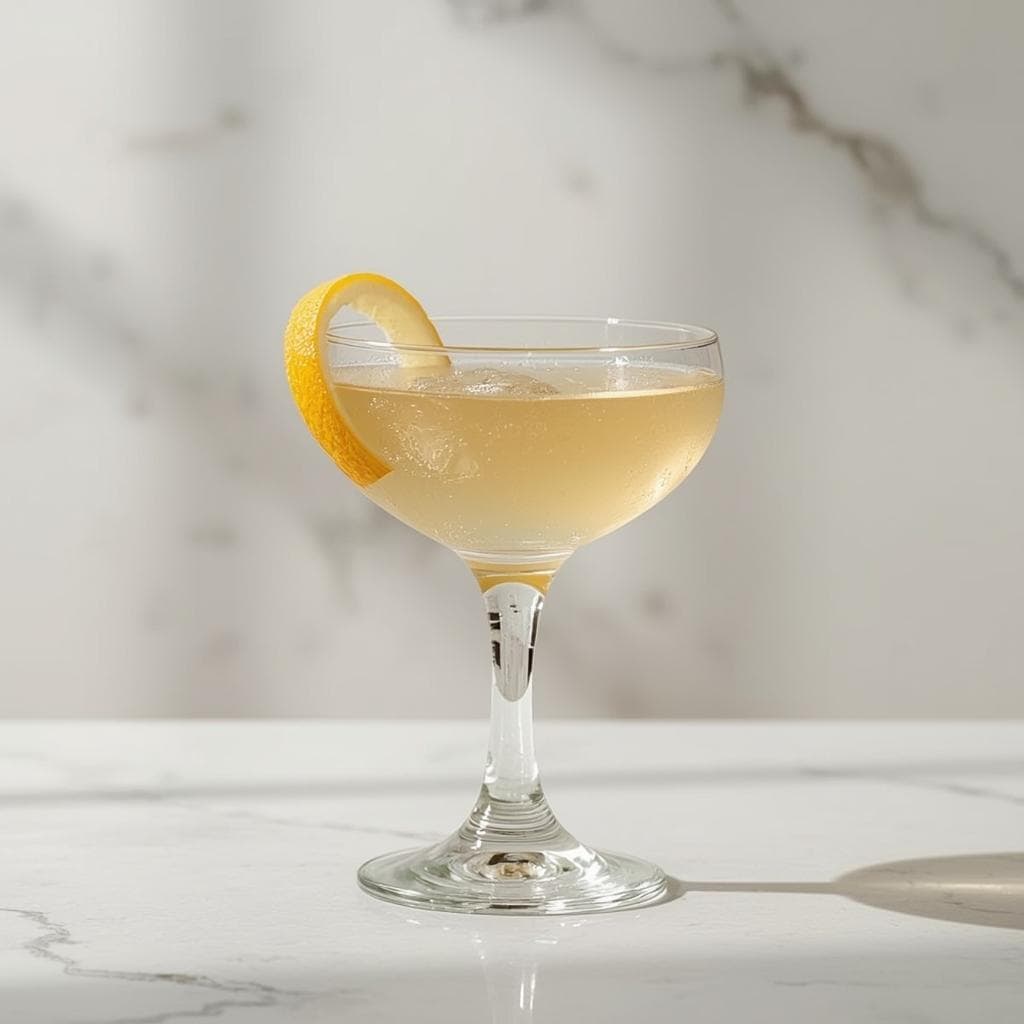
Fairbanks
A pre-dinner gin cocktail that folds apricot liqueur and dry vermouth into a crisp, perfumed, Martini-adjacent sipper. Bright citrus oils and a touch of orange bitters lift the stone-fruit aroma without tipping the glass sweet.
History of Fairbanks
The Fairbanks likely emerged in the early 20th century, when bartenders delighted in small, fragrant tweaks to the Martini template. Many attributions point to the silent-film era and a nod to the actor Douglas Fairbanks, though records are thin and recipes vary. What is consistent is the structure: gin forward, laced with dry vermouth and a restrained stone-fruit accent. Printed recipes from the interwar period show both apricot liqueur and, in some versions, crème de noyaux, which would lend a blush and almond nuance. The apricot-leaning build endured because it keeps the drink dry yet aromatic. Orange bitters appear as a common thread, giving grip and citrus lift without souring the profile. Like many Martini relatives, the Fairbanks travelled quietly through bar manuals, reappearing whenever classic technique regained favour. Its modern appeal lies in the balance: perfume without sweetness, poise without austerity. It remains an elegant aperitif that rewards careful stirring and a bright twist.
Why the Fairbanks Works
Gin supplies backbone and botanicals, dry vermouth bridges spirit and liqueur with herbal dryness, and apricot liqueur adds a measured fruit note that stays out of the way. The ratios keep sweetness in check so the drink reads crisp rather than lush. Stirring on cold, solid ice preserves clarity while delivering just enough dilution to tame the edges. Proper chill concentrates aroma and gives the drink a polished, silken texture that a shake would cloud. A lemon twist and orange bitters tie citrus oils to stone fruit, pulling aroma to the top of the glass. The result is bright and perfumed on the nose, yet dry and poised on the palate.
Should You Mix Ahead?
This recipe batches well as a spirit-forward stir-down. Combine gin, dry vermouth, and apricot liqueur in a clean bottle, skipping bitters and citrus until service. Store chilled to minimise extra dilution when stirring to order. For parties, pre-dilute the batch by about 20 percent with filtered water, then keep in the freezer. This gives a near service-ready texture; you’ll only need a brief stir with ice to brighten and add aroma. Always add the lemon twist and bitters at the last moment so the top notes stay lively. Label the bottle with date and ratios, and aim to use within a week for best vermouth freshness.
Food & Snack Pairings
Salty, delicate snacks suit the Fairbanks’ dry edge. Think olives, salted almonds, or thinly sliced cured fish on buttered toast. The apricot note plays nicely with briny and herbal flavours. Soft-ripened cheeses with a clean rind work well, offering richness without overpowering the glass. Fresh herbs and citrus zest on canapés echo the garnish and lift the pairing. Light spring dishes like asparagus with lemon, grilled artichokes, or a simple herb chicken skewers make sense. Keep spice gentle and avoid heavy sweetness to preserve the aperitif feel.
How to Make Fairbanks
Chill a coupe thoroughly; a cold glass keeps the drink tight and glossy. Measure all ingredients accurately to protect the delicate balance between dry and aromatic. Add gin, dry vermouth, apricot liqueur, and orange bitters to a mixing glass filled with solid ice. Stir smoothly for 20 to 30 seconds until very cold and properly diluted. Strain into the chilled coupe. Express a wide lemon twist over the surface to coat with oils, then either discard or place as garnish.
When to Serve
Serve as an aperitif before dinner when you want appetite-whetting aromatics without heaviness. Early evening suits it best. It thrives in spring and early summer, when bright herbs and light dishes are on the table. The citrus and stone-fruit nose feels seasonal without leaning sweet. Pour it for small gatherings or quiet moments where detail can be appreciated. It’s a conversation drink rather than a high-volume party pour.
Common Mistakes
Overpouring the apricot liqueur turns the drink cloying. Keep it measured and let the vermouth and bitters add structure.
Stirring too briefly leaves the cocktail hot and sharp. Aim for a frosty mixing glass and a velvety texture, a sign you’ve reached proper dilution.
Using tired vermouth dulls the profile. Store vermouth refrigerated and replace the bottle regularly to keep herbs vivid.
Recommended
Best gin for Fairbanks
Choose a juniper-led gin with crisp citrus and restrained florals. This keeps the drink anchored and prevents the apricot from dominating. Bottlings with heavy exotic botanicals can crowd the glass.
Best vermouth for Fairbanks
Use a dry vermouth that is herbal and brisk rather than sweet-leaning. The role is to bridge gin and liqueur while maintaining a clean, aperitif finish.
Best liqueur for Fairbanks
Select an apricot liqueur with clear fruit aroma and moderate sweetness. Avoid syrupy styles that can weigh down the palate.
Taste Profile
Ingredients
Instructions
Chill the glass
Place a coupe in the freezer or fill with ice and water to chill thoroughly.
Build in a mixing glass
Add the gin, dry vermouth, apricot liqueur, and orange bitters to a mixing glass filled with fresh ice.
Stir to chill and dilute
Stir smoothly until the outside of the mixing glass is very cold and the drink is silky, about 20–30 seconds.
Strain
Discard any ice from the chilled coupe and fine-strain the cocktail into the glass.
Garnish
Express a wide lemon twist over the surface to coat with oils, then garnish or discard as preferred.
Bartender Tips
Mind the apricot
Apricot liqueur varies in sweetness; start with 0.5 fl oz and adjust by a teaspoon if your bottle is especially dry or sweet.
Cold and clear
Use large, solid ice for stirring to achieve chill without over-dilution and to keep the drink brilliantly clear.
Fresh vermouth matters
Refrigerate vermouth after opening and replace regularly; stale vermouth flattens the drink’s herbal brightness.
Build a zero-alcohol Fairbanks by swapping gin for a juniper-forward alcohol-free spirit and replacing apricot liqueur with a concentrated apricot syrup. Balance the syrup with a touch of white tea infused with herbs to mimic vermouth’s dryness. Keep the orange bitters in style by using an alcohol-free bitters alternative or a few drops of orange tincture. Stir the components with plenty of ice to achieve the same chill and texture. The goal is a crisp, perfumed sip without overt sweetness, so start with less syrup than you think and adjust to taste. A long lemon twist still matters, providing top notes and a familiar Martini-like nose. Serve it in a chilled coupe to preserve temperature and ceremony. The drink should read herbal first, stone-fruit second, and finish clean. If it feels flat, add a tiny pinch of salt to open the flavours and lift aromatics.
Similar Drinks
Frequently Asked Questions
Which gin style works best in a Fairbanks?
A classic, juniper-forward gin provides the backbone this drink expects. Contemporary gins can work, but avoid loud flavours that fight the apricot and vermouth.
Should I shake or stir the Fairbanks?
Stir it. Stirring keeps the cocktail clear and silky while controlling dilution, which is essential for a spirit-forward aperitif.
How strong does the Fairbanks feel?
It drinks like a firm Martini: aromatic and bracing but balanced by vermouth and a touch of fruit. Expect a confident sip rather than a sweet, easy-going one.
Can I make a batch for a party?
Yes. Combine the base spirits in advance, chill well, and add bitters and lemon twist at service. A small pre-dilution helps achieve bar-quality texture straight from the freezer.
Hangover Risk
Risk Level
Hangover risk based on alcohol type, content, and serving size: 3/5. Always drink responsibly.
Recipe Rating
Based on 2 reviews