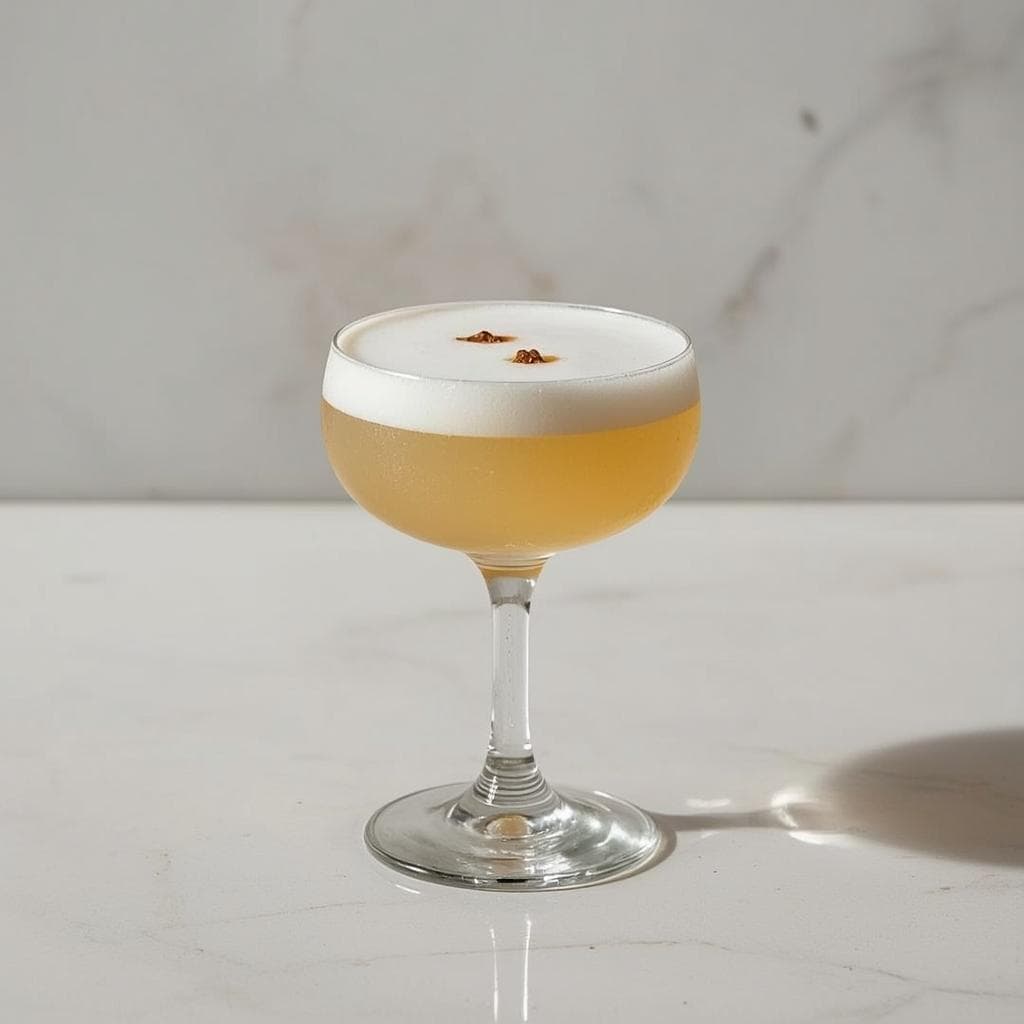
Benedictine Sour
A plush, herbal take on the classic sour, marrying French-style herbal liqueur with fresh lemon, aromatic bitters and a silky egg-white foam. It’s honeyed and spiced, brightened by citrus, and finishes dry enough to invite another sip.
History of Benedictine Sour
Sour-style cocktails date to the nineteenth century, when citrus and sugar balanced strong spirits for sailors and bar-goers alike. The template spread quickly because it was simple, stable and easily adapted to local tastes. From there, the method anchored both classic and modern bartending. The Benedictine Sour is a later interpretation that swaps a traditional base spirit for a complex herbal liqueur. Its exact origin is hazy, likely arising in modern cocktail bars exploring liqueur-forward builds. Bartenders found the liqueur’s honeyed spice worked naturally in the sour’s structure. Rather than inventing a new form, the drink refines an old one. The citrus trims sweetness while egg white, when used, lends a creamy texture that flatters the liqueur’s aromatics. A dash or two of bitters ties the flavours together and keeps the finish tidy.
Why the Benedictine Sour Works
A rich, honeyed herbal liqueur carries both sweetness and spice, so fresh lemon is the cleanest counterweight. The citrus resets the palate and stops the profile from feeling cloying. The classic sour ratio is nudged to respect the liqueur’s inherent sweetness. Egg white softens acidity and adds a velvet foam that lifts aroma. This texture amplifies spice and honey notes without extra sugar, letting the drink feel plush yet poised. If skipping egg white, you gain brightness and a leaner profile. Bitters knit everything together, adding a gentle spine and aromatic lift. A firm, cold shake controls dilution so the sweetness doesn’t sprawl. Fine-straining ensures a polished, silky pour that lasts in the glass.
Should You Mix Ahead?
Pre-batch the liquid base by combining herbal liqueur, lemon juice and bitters in a sealed bottle and refrigerate for up to 24 hours. Leave out the egg white until service to protect texture and shelf life. Always shake each portion with fresh ice to restore chill and dilution. If batching for a party, scale the base and include 10–15% cold water by volume to simulate shake dilution for a quick pour version. Dry-shake each serving with egg white separately for the foam, then top with the batched base and give a brief wet shake. Fine-strain to keep the presentation polished. Label your batch with date and ratios so tweaks are easy next time. Citrus fades, so plan to use the batch the same day for best brightness. Keep glassware chilling to maintain that tight foam and crisp aroma.
Food & Snack Pairings
Salted nuts, green olives and hard cheeses make excellent small bites, as their savoury edge checks the drink’s honeyed notes. The acidity resets the palate between mouthfuls. A citrus-zest biscuit also mirrors the lemon. Roast chicken with herbs or a thyme and lemon roast vegetable tray suits the drink’s herbal warmth. The cocktail’s brightness cuts through richness without overwhelming delicate flavours. Grilled mushrooms are a good vegetarian match. For dessert, shortbread or a light almond cake keeps things airy and not overly sweet. Avoid heavy chocolate, which can flatten the drink’s spice and citrus lift. A simple lemon tart works if you keep slices modest.
How to Make Benedictine Sour
Chill a coupe. Add the herbal liqueur, fresh lemon juice, egg white and bitters to a shaker. Dry-shake vigorously to build a stable foam. Add plenty of cold, solid ice and shake hard until the tin is frosty. This controls dilution and tightens texture while chilling the drink fully. Aim for a firm 10–12 second shake. Fine-strain into the chilled coupe to remove ice shards and maximise silkiness. Express a lemon twist over the top and either discard or garnish. A couple of bitters drops on the foam are optional.
When to Serve
Serve as an after-supper sipper when you want something soothing yet bright. The herbal profile feels restorative without heaviness. It lands neatly between dessert and nightcap. Autumn and winter evenings suit this best, especially when spice and citrus feel comforting. It also works on a cool spring night when you fancy a plush texture. Keep the glass small and well chilled. Offer it at intimate gatherings where aroma and presentation can be appreciated. The foam and twist make a fine first impression. It’s also a smart single-serve choice when you want quick theatre from the shaker.
Common Mistakes
Over-sweetening is common; remember the liqueur brings sugar. Start without any extra syrup and adjust only if your lemons are extremely sharp. Taste before you shake with ice to set the balance.
Skipping the dry shake leads to thin foam. Dry-shake first, then wet-shake hard with plenty of fresh ice for a dense, glossy head. Fine-strain to keep the texture smooth.
Using tired citrus dulls the drink. Juice lemons to order and measure precisely. Too many bitters can overwhelm the aromatics, so limit to two dashes and use the twist to add brightness.
Recommended
Best liqueur for Benedictine Sour
Choose a French-style herbal liqueur with honeyed sweetness and warming spice. You want depth without aggressive bitterness, as lemon already brings bite. If your liqueur is less sweet, compensate with a barspoon of simple syrup.
Best bitters for Benedictine Sour
Classic aromatic bitters provide a gentle spine and tidy the finish. Two dashes are plenty to link spice notes in the liqueur with the lemon’s brightness. More than that can overshadow nuance.
Taste Profile
Ingredients
Instructions
Chill and set up
Chill a coupe and ready your shaker, jigger and fine strainer. Express a lemon twist in advance and set aside.
Dry shake
Add the herbal liqueur, fresh lemon juice, egg white and bitters to the shaker. Seal and dry-shake vigorously to build a stable foam.
Wet shake hard
Open the tin, add plenty of cold, solid ice, and shake firmly until the tin frosts over.
Fine strain and garnish
Fine-strain into the chilled coupe. Express the lemon twist over the surface, then garnish or discard.
Bartender Tips
Balance first, then texture
Taste the mix after the dry shake. If your lemons are especially sharp, add a barspoon of simple syrup before the wet shake.
Ice quality matters
Use firm, fresh ice to control dilution. Hollow or wet ice will over-dilute and thin the foam.
Foam finish
For defined foam, strain through a fine strainer and let the drink settle for a few seconds before adding bitters drops or the twist.
Build a zero-alcohol base by making a strong herbal infusion with honeyed spice notes. Think warming herbs, citrus peels and a touch of clove or anise to echo the liqueur’s profile without the spirit. Sweeten lightly so lemon can still take the lead. Use the infusion at the same measure as the liqueur, add fresh lemon, and include aquafaba if you want that silky foam. Shake hard to create texture and lift. A couple of drops of glycerine-based bitters alternative can provide aromatic structure. Keep the finish snappy by avoiding heavy syrups. Taste and adjust with a few extra drops of lemon if the drink feels sweet. Serve in a chilled coupe with a neat citrus twist to stay on script.
Similar Drinks
Frequently Asked Questions
Which ingredients define a Benedictine Sour and can I substitute?
You need a honeyed, spice-forward herbal liqueur, fresh lemon juice, a touch of aromatic bitters and, optionally, egg white for texture. If you substitute the liqueur, choose something herbal and gently sweet; you may need a few drops of syrup if the alternative is drier. Always keep lemon fresh and measured for balance.
What is the best technique to get a stable foam?
Use a two-stage shake. Dry-shake first to aerate the egg white, then add plenty of cold ice and shake hard until the tin frosts. Fine-strain and pour into a chilled coupe so the foam sets neatly.
How strong does it feel and what’s the ABV like?
It drinks medium-strong with a plush mouthfeel, sitting around the mid-teens in alcohol by volume. The sweetness and foam soften the edges, so it feels gentler than a spirit-forward drink. Keep portions modest and well chilled for clarity.
Can I batch this for a party, and when should I serve it?
Batch the liqueur, lemon and bitters in advance and keep cold; add egg white per serve. It’s ideal after dinner or as a cosy evening cocktail in cooler months. Pre-chilled coupes and a quick hard shake at service keep texture consistent.
Hangover Risk
Risk Level
Hangover risk based on alcohol type, content, and serving size: 3/5. Always drink responsibly.
Recipe Rating
Based on 2 reviews